Top 10 AfterShip Alternatives for E-Commerce Brands in 2026
AfterShip is a broad post-purchase platform, but the right alternative depends on what your business needs beyond tracking: returns, delivery exception management, carrier cost recovery, shipment insurance, analytics or lower-cost API access.
This guide compares ten AfterShip alternatives across product scope, carrier coverage, integrations, pricing, G2 ratings and operational fit.
For narrower requirements, Narvar and parcelLab are strong enterprise post-purchase CX platforms, TrackingMore and 17TRACK suit tracking and API-first use cases, ClickPost fits complex multi-carrier logistics, Loop is built for returns-led workflows, and CWILL suits lower-cost Shopify and WooCommerce tracking.
AfterShip is no longer just a package-tracking product. Its suite now spans tracking, returns, shipping labels, AI-estimated delivery dates, shipment protection, warranty claims and order edits.
That changes how an alternative should be evaluated. The right replacement depends less on whether another tool can show tracking events and more on which parts of your post-purchase operation you actually need to improve. Most buyers fall into one or more of these groups:
- Tracking: broad carrier coverage, APIs and branded tracking pages.
- Customer experience: notifications, delivery promises and fewer "where is my order" contacts.
- Returns: self-service returns, exchanges and store credit.
- Exceptions: catching delays and failed deliveries before customers do.
- Logistics analytics: carrier, lane and service performance data.
- Shipping-cost control: invoice auditing, refund recovery, insurance and better carrier rates.
Why Are E-Commerce Brands Looking for AfterShip Alternatives?
Brands rarely leave a tracking platform over one feature. The decision usually comes from one of five pressures.
1. Cost at real shipping volume
Entry prices are a poor guide. What you pay depends on monthly tracked shipments, the number of modules you add, overage charges, API usage, returns volume, notification sends and implementation work. A plan that looks inexpensive at 1,000 orders a month can look very different at 50,000.
2. Need for deeper, specialized functionality
Some teams need more depth in one area than a broad suite provides: enterprise-grade customer communication, a developer-first tracking API, returns and exchanges, failed-delivery management, carrier performance analytics or shipping-cost control.
3. Delivery operations beyond status visibility
Seeing a tracking event is not the same as acting on it. Many brands now want shipment data to trigger work: a support alert, an exception workflow, a lost-parcel claim, an invoice audit or a carrier performance review.
4. Tool consolidation
Running separate tools for tracking, returns, shipment protection, shipping audit and carrier-rate analysis means separate contracts, separate data and separate logins. Some teams want fewer systems that share the same order and shipment context.
5. Shipping cost and carrier accountability
Buyers whose evaluation includes carrier billing accuracy, refund recovery for late or lost parcels, and rate optimization need capabilities that sit outside the traditional post-purchase CX stack. That requirement narrows the field quickly.
Top 10 AfterShip Alternatives
Each profile follows the same format: who it is best for, what it does, carrier and integration coverage, pricing, G2 rating and where it differs from AfterShip.
1. LateShipment.com
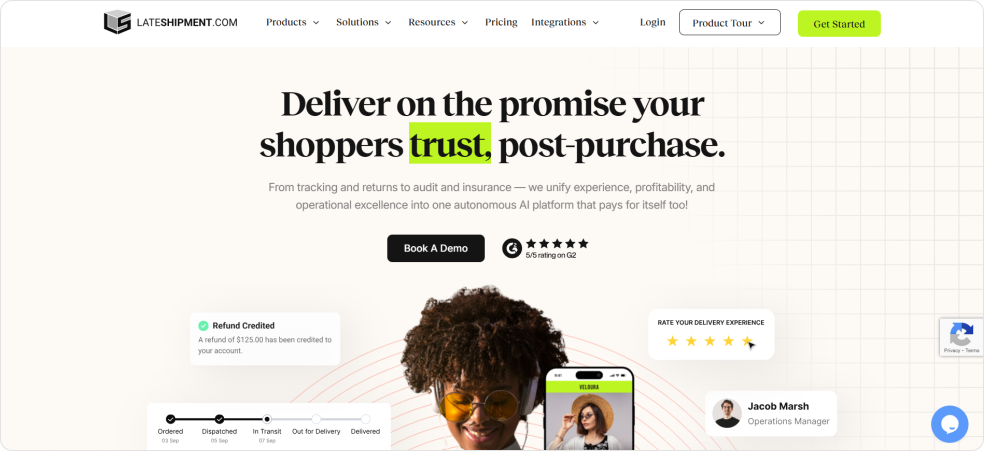
Best for: Brands that want to consolidate their post-purchase experience and shipping-cost operations in one platform.
LateShipment.com is a post-purchase platform that combines delivery experience management, returns, carrier invoice auditing, shipping insurance and carrier rate negotiation in a single product. It is the only platform in this comparison that covers all five functions.
Key features:
- Delivery experience management (OneTrack): branded tracking pages, proactive delivery notifications, predictive exception alerts, estimated delivery dates, and carrier, service and lane analytics.
- Returns (OneReturn): self-service returns, exchange-first workflows, store credit and policy automation.
- Carrier invoice auditing (OneAudit): audits carrier invoices for 50+ service failures and billing errors and files eligible refund claims.
- Shipping insurance (OneProtect): rules-based coverage for lost and damaged shipments, with automated claims.
- Carrier rate negotiation: data-backed rate, discount and surcharge recommendations built on your shipping patterns and peer benchmarks.
| Carriers & Integrations | 1,200+ carriers, plus Shopify, BigCommerce, WooCommerce, Klaviyo, Gorgias, Zendesk and other ecommerce, helpdesk and marketing tools. |
| Pricing | OneTrack has a free Starter plan, with paid tracking from $0.07 per tracked shipment. OneAudit charges a share of refunds recovered, with no upfront fee. OneProtect starts at $0.69 per $100 of coverage. Bundling two or more products saves up to 60%. See pricing. |
| G2 Rating | ★★★★★ 4.9/5 (LateShipment.com seller profile, covering all products) · Read reviews on G2 |
| Where it differs from AfterShip | Unlike tracking-first alternatives, LateShipment.com extends from delivery experience into returns, shipment risk and carrier-cost management, including invoice auditing and rate negotiation, which AfterShip does not offer. |
2. Narvar
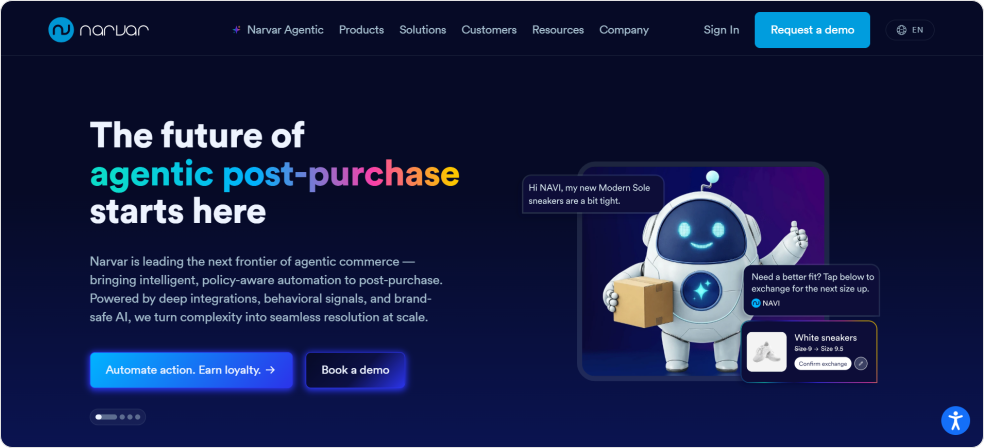
Best for: Large retailers that need enterprise-grade, omnichannel post-purchase CX.
Narvar is an established enterprise post-purchase platform used by large retail brands. Its modules cover delivery promises, tracking, notifications, returns and exchanges, package theft protection and claim-fraud prevention, backed by its IRIS AI engine.
Key features:
- Delivery date promises at checkout (Promise)
- Branded tracking and multi-channel notifications (Track, Notify)
- Returns and exchanges (Shield)
- Package theft protection and delivery insurance (Secure)
- Delivery-claim fraud prevention (Assist)
Carriers and integrations: 1,000+ carriers, with integrations across enterprise commerce and service platforms.
Pricing: Custom pricing. Contact sales.
G2 Rating: 4.2/5
Where it differs from AfterShip: Narvar competes with AfterShip on enterprise scale and omnichannel retail. Expect an enterprise implementation and commercial model. It does not offer carrier invoice auditing or rate negotiation.
3. parcelLab
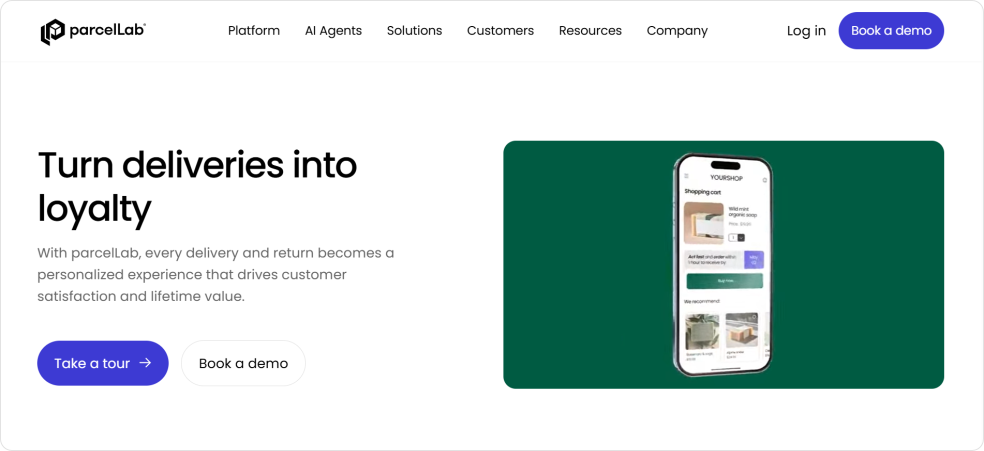
Best for: Enterprise brands that prioritize sophisticated, multilingual post-purchase communication.
parcelLab is an enterprise post-purchase platform focused on branded communication across tracking, delivery exceptions and returns. It is widely used by global retailers that need localized messaging in many markets.
Key features:
- Branded order tracking and messaging
- Proactive exception communication
- Delivery promises at checkout
- Returns, exchanges and refunds
- Analytics and AI agents for customer inquiries
Carriers and integrations: 550+ carriers.
Pricing: Custom pricing. Contact sales.
G2 Rating: 4.6/5
Where it differs from AfterShip: parcelLab goes deeper than AfterShip on communication design and localization for large retailers. It does not include carrier invoice auditing, shipping insurance or rate negotiation.
4. TrackingMore
Best for: Developers and API-first tracking operations.
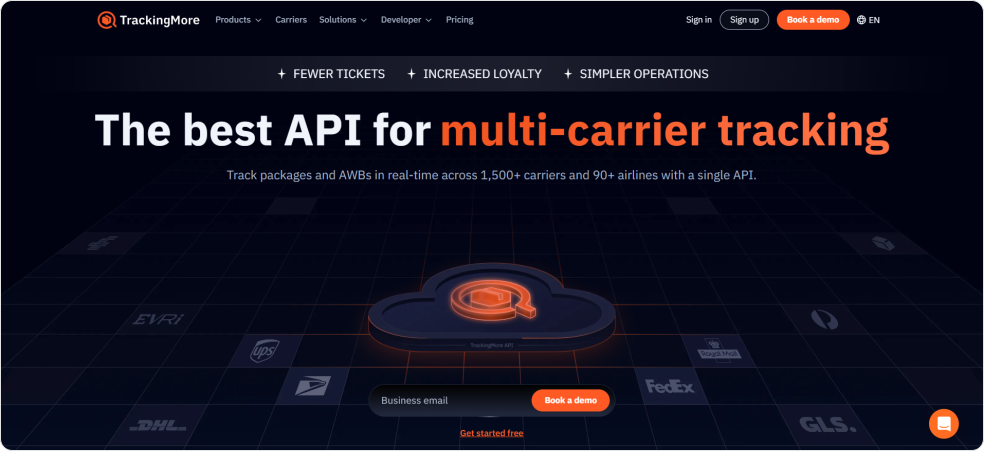
TrackingMore is a tracking-focused platform with a strong API and broad carrier coverage. It suits teams that want to build tracking into their own systems or need a lower-cost replacement for AfterShip Tracking.
Key features:
- Tracking API and webhooks
- Automatic carrier detection
- Branded, customizable tracking page
- Estimated delivery dates
- Shipment dashboard, exception overview and analytics
Carriers and integrations: 1,600+ carriers, plus airline cargo tracking.
Pricing: Free plan available. Paid plans are published on its pricing page, with custom Enterprise pricing.
G2 Rating: 4.8/5
Where it differs from AfterShip: TrackingMore is a direct replacement for AfterShip Tracking. It is not a returns, audit, insurance or rate-negotiation platform.
5. ClickPost
Best for: High-volume brands running complex, multi-carrier logistics.
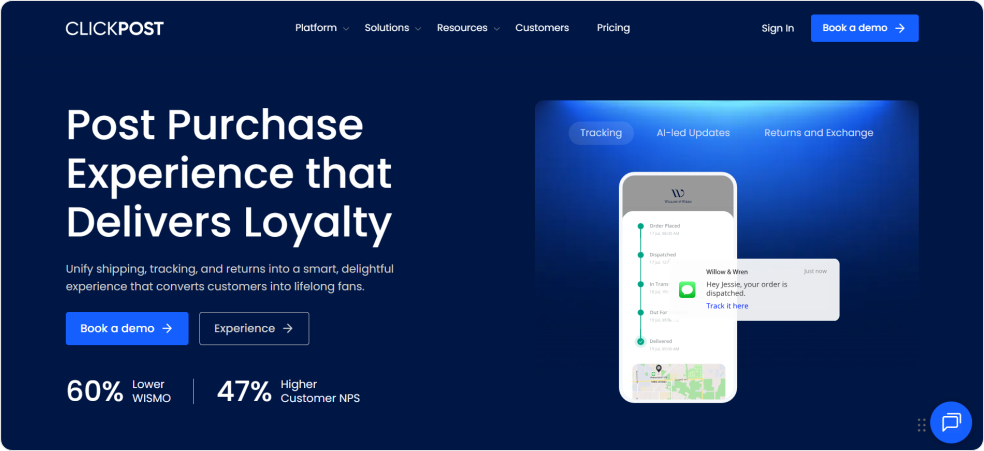
ClickPost is a logistics intelligence platform that focuses on carrier allocation, delivery exceptions and failed-delivery recovery, alongside customer-facing tracking and returns.
Key features:
- AI-based carrier allocation
- Failed delivery (NDR) management, including AI voice agents
- Branded tracking and estimated delivery dates
- Returns and exchange-first flows
- Notifications over WhatsApp, SMS, email and voice
Carriers and integrations: 600+ carriers across 30+ countries.
Pricing: Custom pricing. Contact sales.
G2 Rating: 4.8/5
Where it differs from AfterShip: ClickPost is stronger than AfterShip on logistics operations, carrier allocation and failed-delivery recovery. It does not offer carrier invoice auditing or shipping insurance.
6. Parcel Perform (now Perform.AI)
Best for: Enterprise brands that need delivery intelligence and logistics analytics.
Parcel Perform has rebranded as Perform.AI. The platform has grown beyond tracking into delivery promises, returns and loss or damage claims, carrier performance monitoring, and logistics cost management, including rate comparison and audit of carrier charges.
Key features:
- Delivery visibility with proactive delay alerts
- Delivery date promises based on carrier performance
- Returns and carrier loss or damage claims
- Carrier rate comparison, booking and cost audit
- SLA monitoring and AI decision intelligence
Carriers and integrations: 1,100+ carriers.
Pricing: Custom pricing. Contact sales.
G2 Rating: 4.7/5
Where it differs from AfterShip: Perform.AI is one of the few alternatives besides LateShipment.com with carrier-cost audit capabilities. It does not include shipping insurance or carrier rate negotiation.
7. Redo

Best for: Shopify and DTC brands that treat post-purchase as a retention and marketing channel.
Redo acquired Malomo, a branded order-tracking platform built for Shopify brands. Together they combine Malomo's tracking and post-purchase messaging with Redo's returns and package protection.
Key features:
- Branded order tracking pages
- Post-purchase email and SMS messaging
- Product recommendations and retention offers
- Returns and exchanges through Redo
- Package protection through Redo
Carriers and integrations: Built for Shopify, with Klaviyo and other DTC marketing integrations.
Pricing: Usage-based tracking pricing. Returns and protection are priced separately.
G2 Rating: Review base too small to compare.
Where it differs from AfterShip: Redo is closer to a DTC marketing and retention tool than AfterShip. It does not offer carrier invoice auditing or rate negotiation.
8. Loop

Best for: Brands where returns and exchanges are the main reason to switch.
Loop is a returns-first platform for Shopify brands. After acquiring Wonderment, it added order tracking and delivery alerts as Loop Tracking.
Key features:
- Self-service returns portal
- Exchanges and instant exchanges
- Store credit and bonus credit
- Returns automation and policy rules
- Order tracking and delivery alerts (Loop Tracking)
Carriers and integrations: Built for Shopify, with helpdesk, warehouse and 3PL integrations.
Pricing: Subscription pricing based on plan and volume.
G2 Rating: 4.7/5
Where it differs from AfterShip: Loop goes deeper than AfterShip on exchanges and returns economics. Tracking is a supporting feature. It does not offer carrier invoice auditing, shipping insurance or rate negotiation.
9. CWILL Order Tracking

Best for: Shopify and WooCommerce merchants that want low-cost branded tracking.
CWILL Order Tracking (formerly ParcelPanel and ParcelWILL) is a popular storefront tracking app for smaller Shopify and WooCommerce stores.
Key features:
- Branded tracking page on your own domain
- Automatic shipping notifications
- Estimated delivery dates, before and after purchase
- Product recommendations on the tracking page
- Shipping protection and analytics
Carriers and integrations: 1,600+ carriers. Integrates with Shopify, WooCommerce, Klaviyo, PayPal and Gorgias.
Pricing: Free plan for 20 orders a month. Paid plans start at $11 a month.
G2 Rating: 4.8/5 (seller level)
Where it differs from AfterShip: CWILL is a budget alternative to AfterShip Tracking for smaller stores. It does not offer carrier invoice auditing or rate negotiation.
10. 17TRACK

Best for: Cost-conscious businesses that mainly need broad tracking coverage.
17TRACK is one of the largest consumer and business tracking networks, known for very broad global carrier coverage.
Key features:
- Tracking across a very large carrier network
- Tracking API for platforms and SaaS products
- Shopify order tracking app
- Automated email notifications
- Branded tracking page
Carriers and integrations: 3,500+ carriers and 190+ airlines.
Pricing: Free tier plus paid plans based on tracking volume.
G2 Rating: Not enough G2 reviews to compare.
Where it differs from AfterShip: 17TRACK covers more carriers than most alternatives and costs less, but it is a tracking tool. It does not offer returns, audit, insurance or rate negotiation.
Feature Comparison: AfterShip Alternatives at a Glance
Capabilities reflect each vendor's published product pages as of September 2026. "Partial" means the capability is a secondary feature rather than a core product.
| Feature | LateShipment.com | Narvar | parcelLab | TrackingMore | ClickPost | Perform.AI | Redo + Malomo | Loop | CWILL | 17TRACK |
|---|---|---|---|---|---|---|---|---|---|---|
| Best For | Full post-purchase + shipping-cost stack | Enterprise CX | Enterprise communication | API tracking | Logistics operations | Logistics intelligence | DTC retention | Returns first | Low-cost store tracking | Broad tracking |
| Delivery Experience Management | Yes | Yes | Yes | Yes | Yes | Yes | Yes | Partial | Yes | Yes |
| Returns Management | Yes | Yes | Yes | No | Yes | Yes | Yes | Yes | No | No |
| Carrier Invoice Auditing | Yes | No | No | No | No | Yes | No | No | No | No |
| Shipping Insurance | Yes | Yes | No | No | No | No | Yes | No | Yes | No |
| Carrier Rate Negotiation | Yes | No | No | No | No | No | No | No | No | No |
| Carriers | 1,200+ | 1,000+ | 550+ | 1,600+ | 600+ | 1,100+ | n/a | n/a | 1,600+ | 3,500+ |
| Pricing | Usage based | Custom | Custom | Free + tiers | Custom | Custom | Usage based | Subscription | Free + tiers | Free + tiers |
| G2 Rating | 4.9 | 4.2 | 4.6 | 4.8 | 4.8 | 4.7 | n/a | 4.7 | 4.8 | n/a |
AfterShip Alternatives: Why LateShipment.com Is the Best Overall Option
Most AfterShip alternatives specialize in one or two parts of the post-purchase journey. Some focus on tracking, others on enterprise customer communication, returns or logistics analytics.
LateShipment.com is the only platform in this comparison that brings five functions together in one product: delivery experience management, returns, carrier invoice auditing, shipping insurance and carrier rate negotiation.
That makes it the most relevant choice for ecommerce brands that are not only replacing AfterShip Tracking, but want to consolidate more of their post-purchase and shipping-cost operations. The same shipment data that powers a branded tracking page also flags a late parcel for a refund claim, triggers insurance on a lost package, and shows which carriers and lanes are costing you the most.
How Does LateShipment.com Compare to AfterShip?
Both platforms cover the core post-purchase experience. The difference is in what happens after the parcel ships: LateShipment.com also audits carrier invoices, recovers refunds and helps negotiate carrier rates.
| Capability | LateShipment.com | AfterShip |
|---|---|---|
| Delivery Experience Management | Yes (OneTrack) | Yes (Tracking) |
| Branded Tracking Pages | Yes | Yes |
| Estimated Delivery Dates | Yes | Yes (AI EDD) |
| Proactive Exception Alerts | Yes | Yes |
| Returns & Exchanges | Yes (OneReturn) | Yes (Returns) |
| Shipping Insurance / Protection | Yes (OneProtect, merchant-led, rules-based) | Yes (AfterShip Protection, powered by InsureShield) |
| Carrier Invoice Auditing | Yes (OneAudit, 50+ error types) | No equivalent |
| Carrier Refund Recovery | Yes | No equivalent |
| Carrier Rate Negotiation | Yes | No equivalent |
| Scope | All five post-purchase and shipping-cost functions | Post-purchase CX suite |
| Carrier Coverage | 1,200+ | 1,100+ |
| Pricing Structure | Usage based per product, bundle discounts | Tiered plans per module |
1. More Than Delivery Visibility
Tracking visibility is useful, but delivery events become far more valuable when they trigger action. In LateShipment.com, a shipment event moves through a chain:
Shipment event > Exception detected > Support or operations action > Insurance claim, refund claim or carrier review where it applies
- Delay: the customer is notified before they ask, and the parcel is flagged for a late-delivery refund if the carrier guarantee applies.
- Failed delivery: support gets an alert with the exception reason, so the team can reroute or reship quickly.
- Lost shipment: an insured parcel moves into an automated claim, while an uninsured one is checked for a carrier claim.
- Damaged parcel: photos and order details are attached to the claim without manual screenshots.
- Eligible service failure: OneAudit files the refund with the carrier and tracks it to payout.
Brands using LateShipment.com's proactive delivery notifications see up to 72% fewer delivery-related support contacts. See how it works in OneTrack.
2. Five Post-Purchase and Shipping-Cost Functions in One Platform
- Delivery experience management: branded tracking, delivery dates, notifications and exception alerts.
- Returns: self-service returns, exchanges and store credit.
- Carrier invoice auditing: error detection and refund recovery on every invoice.
- Shipping insurance: rules-based protection with automated claims.
- Carrier rate negotiation: benchmarks and recommendations for better rates and fewer surcharges.
These functions share the same shipment, carrier and order data instead of running as disconnected tools. A delay recorded by tracking becomes evidence for a refund claim. A loss pattern on one lane informs which orders to insure. Audit findings on surcharges feed the next rate conversation with your carrier. One integration, one set of data, and one account team.
3. Recover and Reduce Shipping Costs, Not Just Software Costs
Switching tracking tools can save on software. The bigger number usually sits in your carrier invoices. LateShipment.com is built to lower total shipping cost, not only platform cost:
- Carrier refunds: recover money for eligible late deliveries and other service failures.
- Billing-error recovery: catch duplicate charges, incorrect surcharges and address-correction fees.
- Rate optimization: use your own shipping data to negotiate better discounts and fewer surcharges.
- Support cost: fewer delivery-related tickets through proactive notifications.
- Tool consolidation: replace several point solutions with one platform.
Automated invoice auditing typically recovers 6 to 20% of annual shipping spend. OneAudit charges only a share of what it recovers, so the audit pays for itself. Use the calculator below to estimate your own numbers.
4. Flexible Commercial Model as Shipment Volume Changes
AfterShip prices by plan and module. LateShipment.com prices each product on usage: per tracked shipment for OneTrack, per return for OneReturn, a share of recovered refunds for OneAudit, and per $100 of coverage for OneProtect. There are no long-term contracts, and bundling two or more products saves up to 60%.
Neither model is automatically cheaper. Compare total cost at your real volume by looking at:
- monthly tracked shipments and returns;
- the number of modules you need;
- overage and API charges;
- implementation and onboarding effort;
- support levels included in each plan.
The right comparison is total cost at your actual shipment volume and required functionality, not the entry price.
Conclusion: Choosing the Right AfterShip Alternative
For businesses seeking the broadest alternative in this comparison, LateShipment.com stands out because it combines delivery experience management, returns, carrier invoice auditing, shipping insurance and carrier rate negotiation in one product.
Other platforms can be a better fit for narrower requirements: Narvar and parcelLab for enterprise post-purchase CX, TrackingMore and 17TRACK for tracking and API depth, ClickPost for logistics-heavy operations, Perform.AI for delivery intelligence, Redo + Malomo for DTC retention, Loop for returns-first workflows, and CWILL for lower-cost storefront tracking.
Frequently Asked Questions
The Bottom Line
LateShipment.com is the strongest overall option in this comparison for ecommerce brands that want more than a tracking replacement. It combines delivery experience management, returns, carrier invoice auditing, shipping insurance and carrier rate negotiation in one platform.
If your requirement is narrower, a specialist may make more sense: TrackingMore for API-first tracking, Loop for returns, Narvar or parcelLab for enterprise customer experience, or 17TRACK for low-cost tracking.
The right choice depends on whether you are replacing a tracking tool or rethinking your wider post-purchase and shipping-cost stack.
See how much you can save by switching from AfterShip?
Enter your current AfterShip spend and shipping volumes and find out how much you can save with LateShipment.com
Select the products you're paying for, then enter your total monthly bill.
Ready for an Upgrade from Aftership?
cost-effective post-purchase solution!

Looking for Aftership alternative?
Schedule a call with product expert to get a 60-day free trial and improve your post-purchase journey
Here’s what you’ll gain:

600+ integrations with top e-commerce apps like Klaviyo, Gorgias, and Shopify
Trusted by leading brands – Lindt, Branch, Princess Polly & more
Faster go-live time – Dedicated dev & design support included
24/7 customer support with a dedicated account manager


 Phone
Phone
 Email
Email