



Quick answer: Parcel spend management software helps shippers audit carrier invoices, recover refunds, monitor carrier performance, and reduce avoidable shipping costs. LateShipment.com is a strong fit for e-commerce brands, B2B parcel shippers, and 3PLs that want automated invoice audits, refund recovery, lost and damaged claims support, delivery visibility, and post-purchase cost optimization connected in one platform.
When brands connect their carrier invoices to LateShipment.com for the first time, the most common finding is not the overcharge they expected. It is a systematic accessorial fee error that they have been absorbing for 12 to 18 months without realizing it. Fuel surcharge miscalculations. Address correction fees apply to clean addresses. DIM weight discrepancies are billed at a higher zone than the shipment actually traveled. These are not one-off mistakes. There are structural patterns in how carriers invoice, and they compound quietly across every invoice cycle.
But more important than finding the one that separates parcel spend management from basic invoice auditing is what those billing errors point to operationally. A carrier that consistently misses delivery commitments and still charges full rate is not just a billing problem. It is a delivery reliability problem. And that same delivery unreliability is generating order status inquiries in your support queue and eroding repeat purchase rates in your post-purchase data.
That is the frame for this article. Parcel spend management software is not a back-office finance tool. For e-commerce brands, it is an operational lever that connects cost recovery, carrier accountability, and post-purchase experience in one data layer. Here are the ten platforms worth evaluating in 2026, what each one actually does, and how to pick the right one for your situation.
What is Parcel Spend Management Software?
Parcel spend management software helps shippers track, audit, analyze, and optimize their parcel shipping costs across carriers. The category has expanded significantly over the past five years. What started as invoice auditing, checking carrier invoices for billing errors and filing for refunds, has grown into a broader discipline that includes carrier contract compliance, accessorial fee monitoring, spend analytics by lane or zone, cost variance detection, claims management, carrier performance benchmarking, and, in some platforms, rate modeling and contract negotiation support.
The practical distinction matters for buyers. A parcel audit tool does one job: find errors, file claims, and recover money. A parcel spend management platform does that job and builds on it. It tells you why the errors are happening, which carriers are generating them at the highest rate, what your contract should say to prevent them, and how your delivery performance compares to what you are paying for.
Parcel audit software vs. parcel spend management software
| Category | Parcel Audit Software | Parcel Spend Management Software |
|---|---|---|
| Primary goal | Recover refunds from billing errors and service failures | Control, analyze, reduce, and optimize total parcel spend |
| Scope | Invoice audit, refund filing, claim recovery | Audit, analytics, contract monitoring, carrier performance, forecasting, optimization |
| Typical users | Shipping ops, finance | Logistics, finance, operations, CX, leadership |
| Best for | Immediate cost recovery | Ongoing cost reduction and operational decision-making |
| LateShipment.com | Automates refund recovery and lost and damaged claims | Adds carrier performance visibility, post-purchase CX impact, and connected platform context |
Why Parcel Spend Management Matters More in 2026
Carrier costs have risen faster than most brands’ ability to monitor them. Here are six specific pressures driving parcel spend management up the ops and finance agenda this year:
- Rising carrier base rates. Both FedEx and UPS have raised general rate increases (GRIs) consecutively for several years. These increases compound across all surcharges that are calculated as a percentage of the base rate.
- Accessorial fee creep. Residential surcharges, fuel surcharges, address correction fees, large package fees, and peak surcharges have each grown as a share of total shipping spend. Many brands discover they are paying accessorials they negotiated away in their contract or that have been reclassified in ways that bypass the negotiated rate.
- Invoice errors at scale. Carrier invoices contain a higher rate of billing errors than most finance teams expect. DIM weight miscalculations, duplicate charges, incorrect service level billing, and zone errors are not rare events; they appear systematically across high-volume shippers.
- Lost and damaged claims going unfiled. Most brands replace or refund the customer when a shipment is lost or damaged. Fewer consistently recover the carrier-side claim. The window to file is short. The process is manual. The result is that eligible recoveries sit unclaimed.
- Contract complexity. Multi-carrier environments with tiered pricing, negotiated discounts, and service-level agreements create invoices that are genuinely difficult to audit without software purpose-built for the task.
- Delivery failures affecting customer experience and shipping costs simultaneously. A late delivery is a service failure that generates a carrier refund claim. It is also the same event generating a customer order status inquiry, a potential return, and a risk to repeat purchase. For brands that connect their audit data to their post-purchase operations, each of these problems is the same shipment.
Key Features to Look For in Parcel Spend Management Software
Not every platform on this list covers every capability. Before evaluating vendors, decide which of these features your operation actually needs today versus in 12 months:
- Automated parcel invoice audit. The software should detect rate errors, duplicate charges, service failures, accessorial overcharges, incorrect surcharges, DIM weight discrepancies, lost packages, and damaged packages.
- Refund and claims automation. The tool should not just flag issues. It should file, track, escalate, and recover refunds without manual intervention, including escalating denied claims.
- Lost and damaged claims management. Separate from service failure refunds: the ability to initiate, document, and track claims for packages that were physically lost or damaged in transit.
- Carrier performance analytics. Teams need visibility into late deliveries, exception rates, refund trends, service-level misses, and carrier reliability by lane, zone, and service type.
- Contract and rate compliance. The platform should compare invoices against contracted rates and negotiated terms, surfacing discrepancies between what you agreed to pay and what you are actually billed.
- Spend visibility by carrier, service, zone, lane, or warehouse. Granular cost breakdowns by dimension rather than aggregate totals. This is the data that feeds carrier negotiations and operational optimization decisions.
- Scenario modeling and forecasting. Helpful for larger shippers evaluating carrier mix changes, zone skipping strategies, service level adjustments, and the spend impact of fulfillment location changes.
- Integrations with carrier, ERP, WMS, OMS, and e-commerce platforms. The value of parcel spend data increases when it connects to the systems that already hold your order, inventory, and fulfillment data.
- Transparent or success-based pricing. Most vendors on this list do not publish pricing. A few do. Understanding whether you are paying a flat monthly fee, a success-based commission, or a custom enterprise rate matters for ROI calculation.
- Post-purchase impact visibility. For e-commerce brands specifically: the ability to connect shipping spend waste, billing errors, delivery failures, late deliveries, etc, to the downstream CX costs they generate (order status inquiries, return rates, customer retention impact).
Best Parcel Spend Management Software Compared
The table below summarizes the ten platforms covered in this article across their primary audience, core capabilities, and pricing signal. Detailed write-ups follow.
| Software | Best For | Key Capabilities |
|---|---|---|
| LateShipment.com | E-commerce brands, B2B parcel shippers, and 3PLs that want parcel audit plus post-purchase visibility | Parcel audit, refund recovery, lost and damaged claims, carrier error recovery, analytics, multi-carrier support, branded tracking, returns, shipping protection |
| Reveel | Parcel-heavy shippers wanting analytics, benchmarking, modeling, and contract intelligence | Shipping analytics, contract management, parcel audit, finance automation, modeling and simulation, all-modes freight audit and payment, AI analyst |
| Sifted | Shippers wanting AI-driven parcel intelligence and always-on optimization | Automated auditing, invoice analysis, AI Copilot, real-time alerts, scenario modeling, carrier performance tracking, contract visibility |
| Shipware | Shippers needing spend analytics, parcel audit, parcel pay, and contract negotiation support | Spend Management Portal, consolidated carrier view, shipping KPIs, advanced analytics, rate increase calculator |
| TransImpact | Larger shippers needing expert-led contract negotiation, audit, margin analysis, and cost variance tools | Contract negotiation, parcel audit and analytics, margin analysis by SKU and geography, cost variance alerts, AI-driven optimization |
| Intelligent Audit | Enterprise shippers needing freight and parcel audit, BI, modeling, contract tools, and carrier payments | Freight audit, recovery, BI, lost and damaged claims, anomaly detection, modeling tools, advanced reporting, contract management, real-time visibility |
| Green Mountain | Very large, complex parcel networks needing expert-led spend management and long-term optimization | Parcel spend management, network planning, monitoring and optimization, predictive models, expert-led strategy |
| Loop | Shippers wanting a logistics data foundation across parcel, freight, ocean, and air | Freight and parcel audit, real-time visibility, parcel contract optimization, carrier payments, AI data normalization, cost allocation, scenario planning |
| Postal Source | Businesses wanting spend management with contract optimization, audit, bill pay, and mailing expertise | Contract optimization, audit and invoice recovery, bill pay, carrier management, real-time reporting, advanced analytics |
| ProShip | Enterprise shippers needing multi-carrier shipping execution with spend intelligence context | Multi-carrier shipping, order matching, automated invoice auditing, advanced analytics |

LateShipment.com helps e-commerce brands and parcel shippers reduce shipping costs by automatically auditing carrier invoices, identifying refund opportunities, and recovering money from service failures, billing errors, lost packages, and damaged shipments. Unlike tools that stop at invoice auditing, LateShipment.com connects parcel spend recovery with delivery visibility and post-purchase operations, making it a strong fit for brands that want to reduce costs while improving customer experience.
The platform audits carrier invoices across 160 checkpoints, covering 50+ refund-eligible error categories including late deliveries, DIM weight discrepancies, incorrect surcharges, duplicate charges, and invalid accessorial fees. Claims are filed automatically and escalated to human specialists when carriers deny legitimate claims. Lost and damaged claims for outbound, inbound, and return-label parcels are handled within the same workflow, not as a separate process.
The audit data also powers LateShipment.com’s fulfillment intelligence layer, where carrier performance is tracked by route, zone, warehouse, service type, and account over time. This longitudinal view turns into a factual foundation for carrier contract negotiations. When a carrier’s late delivery rate by lane, exception frequency, or accessorial billing pattern is documented across months of shipment data, ops and finance teams go into negotiation conversations with evidence rather than instinct.
Brands can see exactly which carriers are underperforming against contracted SLAs, which lanes carry the highest surcharge exposure, and which service types generate the most claimable failures, and use that data to renegotiate rates, restructure agreements, or reallocate volume before the next contract cycle rather than absorbing the cost quietly until renewal.
Where LateShipment.com diverges from pure audit tools is the data layer it builds on top of recovery. Carrier performance analysis by lane, zone, warehouse, service type, and account surfaces the operational patterns behind recurring costs, not just the billing errors themselves. That intelligence feeds into LateShipment.com’s post-purchase platform: the same delivery failure patterns that generate refund claims also feed OneTrack’s proactive notifications, exception alerts, and carrier scorecards. Audit data does not sit in a back-office report. It connects to the systems that touch the customer.
This is the meaningful separation from every other platform on this list. Green Mountain and Intelligent Audit are excellent at enterprise parcel spend management. TransImpact has strong contract negotiation expertise. But none of them connect audit intelligence to a branded tracking experience, a returns flow, or shipment protection decisions. For e-commerce operations teams running multiple post-purchase workflows, that connection removes a category of integration work and adds a category of customer experience data no isolated audit tool can generate.
Key capabilities:
- Automated parcel invoice audit across 160 checkpoints and 50+ refund categories
- Refund recovery with expert human escalation for denied claims
- Lost and damaged claims for outbound, inbound, and return-label parcels
- Carrier performance analytics by carrier, lane, zone, surcharge type, and warehouse
- Back-audit of up to 45 days of historical shipments on first connection
- Supports 600+ carriers across 40+ countries
- Connected to OneTrack (branded tracking and delivery alerts), OneReturn (returns), and OneProtect (shipping protection)
Pricing: Success-based pricing with no monthly fees and no contracts. You only pay 35% of what we recover for you.
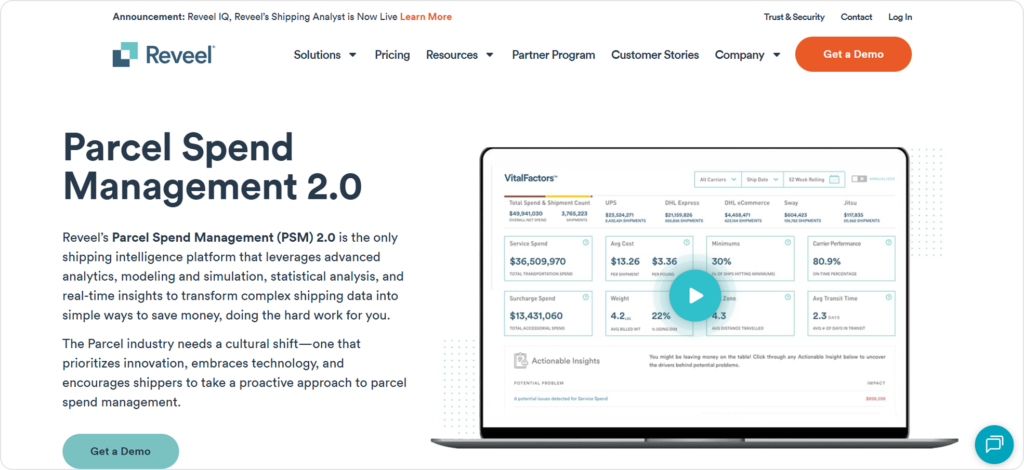
Reveel positions itself around what it calls Parcel Spend Management 2.0, a framing that pushes beyond invoice auditing into proactive analytics, carrier benchmarking, and spend optimization as an ongoing discipline rather than a one-time recovery exercise. The platform is built for shipping teams that want to understand how their spend compares to peers, not just whether their invoices are correct.
Its Reveel Peer Index provides benchmarking data that lets shippers see where their carrier rates, service mix, and accessorial exposure compare to other shippers of similar volume and profile. Vital Factors is a framework for identifying the highest-impact cost levers in a specific shipping profile. Actionable Insights translates that analysis into specific next steps.
Reveel’s platform also includes all-modes freight audit and payment, which makes it relevant for shippers managing LTL and FTL alongside parcels. The finance automation layer handles invoice reconciliation and payment workflows, reducing manual processing time for finance teams with complex carrier billing.
Key capabilities:
- Parcel audit and refund recovery
- Advanced shipping analytics with modeling and simulation
- Reveel Peer Index carrier benchmarking
- Contract management and compliance monitoring
- Finance automation and invoice reconciliation
- All-modes freight audit and payment (parcel, LTL, FTL)
- AI analyst for spend intelligence

Sifted describes its product as an always-on logistics analyst, a platform that continuously monitors carrier data, normalizes charges across carriers, surfaces cost and service risks in real time, and recommends next steps. Its SiftedAI Copilot is positioned as the intelligence layer on top of audit and analytics, offering scenario modeling and strategic recommendations based on a shipper’s specific data.
The platform pulls carrier data from accounts, systems, and spreadsheets, normalizes every charge across carriers, spots cost and service risks, models strategy changes, and recommends next steps. This positions Sifted as a tool for logistics teams that want continuous monitoring and proactive cost management, not just periodic invoice review.
Sifted has a strong content presence in the logistics intelligence and parcel spend optimization space, which means buyers searching this category will likely encounter it early in their research. The platform’s content moat around AI-driven alerts and scenario modeling reflects a genuine product capability, not just marketing framing.
Key capabilities:
- Automated parcel invoice auditing and comprehensive invoice analysis
- SiftedAI Copilot for intelligence and recommendations
- Real-time cost and service risk alerts
- Scenario modeling for carrier strategy decisions
- Carrier performance tracking and contract visibility
- Always-on monitoring rather than batch-period audit cycles
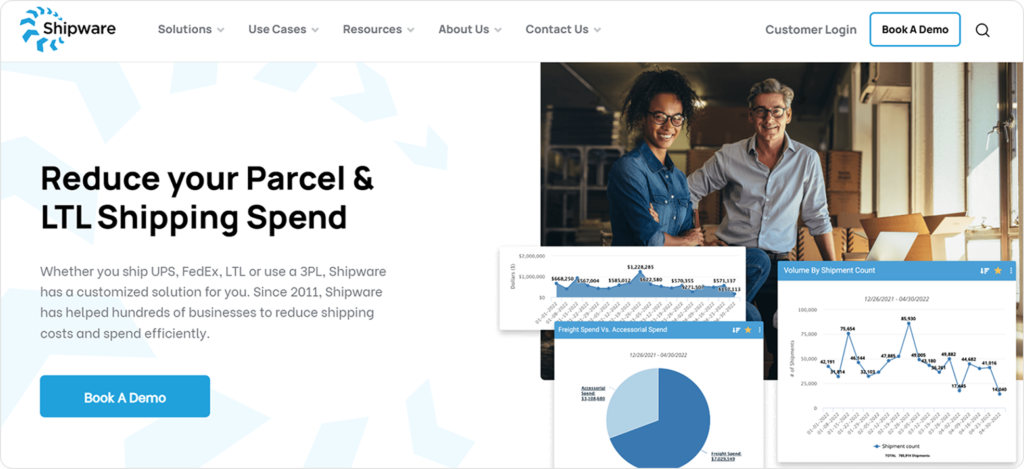
Shipware offers a parcel spend management portal that consolidates carrier data, shipping KPIs, and advanced analytics into a single view for operations and finance teams. It is designed to sit alongside its other service offerings: parcel audit, parcel pay, and contract negotiation, so shippers can move between spend monitoring, invoice processing, and contract improvement work in one relationship.
The Spend Management Portal provides a consolidated carrier view across all active carriers, predefined and custom analytics charts, and a rate increase calculator for modeling the impact of carrier GRIs. A 30-day free trial is available, and Shipware is one of the few vendors on this list with publicly visible pricing signals.
Shipware is a particularly strong fit for mid-market shippers that want analytics without a large enterprise software commitment, and that may already be using or considering Shipware’s parcel audit or contract negotiation services.
Key capabilities:
- Spend Management Portal with consolidated carrier view
- Shipping KPIs and advanced analytics
- Rate increase calculator and GRI impact modeling
- Parcel audit, parcel pay, and contract negotiation (sold as companion services)
- 30-day free trial available
TransImpact combines software with industry expertise to help shippers reduce parcel costs through contract negotiation, invoice audit, spend intelligence, margin analysis, and cost variance monitoring. The model is distinctive in the category: the platform is strong, but so is the consulting layer around it. TransImpact works directly with clients on carrier negotiations, not just on surfacing data for the client’s team to act on.
Its Parcel Spend Intelligence product provides margin analysis by SKU, product line, business unit, and geography, giving finance and logistics teams a more granular view of where shipping costs are affecting profitability at a business-unit level, not just a carrier level. Parcel cost variance alerts notify teams when spending deviates from expected patterns before it appears in monthly reports.
TransImpact also offers a 60 day free trial for Parcel Spend Intelligence using real customer data, with clients keeping 100% of the savings generated during the trial period. This makes it low-risk to evaluate for larger shippers with complex carrier agreements.
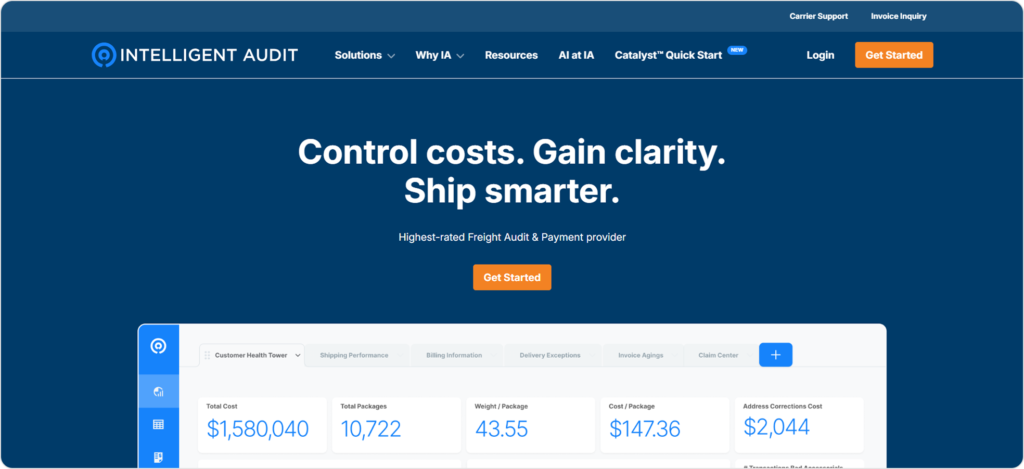
Intelligent Audit is built for enterprise logistics and finance teams that need more than parcel audit: they need a complete freight and parcel management layer that spans audit and recovery, business intelligence, anomaly detection, network optimization, contract management, and carrier payment workflows.
Its AI-powered anomaly detection identifies irregular billing patterns, unusual carrier charges, and cost anomalies that might not be caught by standard invoice audit checkpoints. The modeling tools and network optimization capabilities make it relevant for logistics teams evaluating carrier mix changes, service level adjustments, or fulfillment network reconfigurations.
The carrier payment integration with TriumphPay adds a financial workflow dimension; shippers can manage both audit and payment in a single platform, which is valuable for enterprises with complex accounts payable processes around freight and parcel carrier invoices.

Green Mountain is built for high-volume parcel shippers with complex networks where the scale and sophistication of the operation exceeds what most software-first platforms can adequately address. It combines parcel spend management software with expert-led strategy, network planning, optimization modeling, predictive spend analytics, and financial process support in a model designed for enterprises with hundreds of millions of dollars in annual parcel spend.
Green Mountain’s site reports $541M in client savings and 1.6 billion shipments processed across its client base. These are indicators of a platform tested at serious enterprise scale. Its parcel spend management work includes monitoring, optimization, and predictive modeling, with consultants actively involved in client decisions rather than just delivering reports.
Green Mountain is not the right fit for mid-market e-commerce brands that need quick setup and immediate refund recovery. It is the right fit for very large, complex operations that need a strategic partner for parcel cost management over a multi-year horizon.
Key capabilities:
- Parcel spend management with monitoring and optimization
- Parcel network planning and predictive models
- Expert-led shipping strategy with consultants assigned to accounts
- Financial excellence and accounting process support
- Long-term optimization focus rather than immediate recovery only
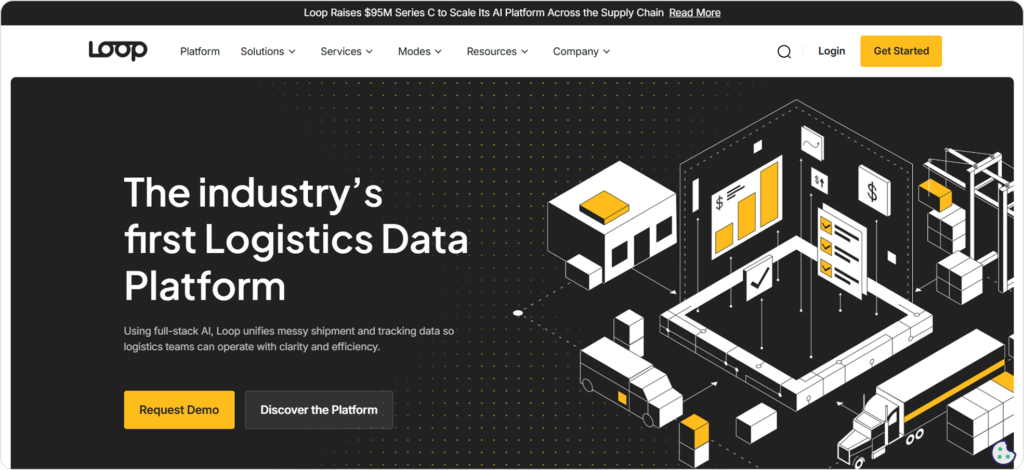
Loop is a logistics data platform built for transportation teams whose biggest problem is fragmented, inconsistent data across carriers, TMS systems, ERP platforms, emails, PDFs, and manual spreadsheets. Its AI-based data normalization layer unifies messy transportation data from any source format into a structured foundation that can be analyzed, audited, and acted on.
On the parcel side, Loop provides invoice auditing, real-time visibility, contract optimization, and scenario planning. Its granular cost analysis lets teams drill down to invoice line-item level across parcel carriers. The Exception Agent automates the identification and routing of billing exceptions, reducing the manual triage work that typically falls on operations teams.
Loop’s multi-mode coverage: parcel, LTL, FTL, ocean, and air, makes it a strong fit for shippers with significant freight complexity alongside their parcel operations. For brands that primarily ship parcel and do not need multi-mode freight management, the platform’s scope may be more than required.
Key capabilities:
- Freight and parcel audit across all transportation modes
- AI-based data normalization from carriers, TMS, ERP, emails, and PDFs
- Real-time parcel visibility
- Parcel contract optimization and scenario planning
- Carrier payments and cost allocation
- Exception Agent for automated billing exception routing
- Loop Intelligence for decision support

Postal Source offers parcel spend management as part of a broader communication, mailing, and parcel operations portfolio. Its platform covers contract optimization, audit and invoice recovery, bill pay, carrier management, and reporting through what it calls the Parcel Platform, a real-time payment, approval, and reporting environment for operations and finance teams.
Postal Source claims over $1.5 billion in shipping spend under management and an average annual savings of 19.5% for clients (Postal Source, public website). Its carrier distribution analysis and modal optimization capabilities give it a planning dimension alongside the audit and recovery work.
Postal Source’s combination of mailing and parcel expertise makes it relevant for organizations with significant first-class mail, marketing mail, or hybrid mailing-plus-parcel spend profiles, a use case that pure parcel audit tools do not address.
Key capabilities:
- Contract optimization and carrier management
- Audit and invoice recovery
- Bill pay with approvals and real-time reporting
- Carrier distribution analysis and modal optimization
- Advanced reporting and parcel analytics
- Mailing and shipping operations combined

ProShip is primarily known as enterprise multi-carrier shipping software, a transportation execution layer that handles carrier selection, rate shopping, label generation, and order matching at scale. Its parcel spend management capabilities sit on top of that execution foundation: automated invoice auditing and advanced analytics that give shipping teams visibility into spend patterns alongside their day-to-day shipping operations.
ProShip’s parcel spend management discussion in its own content references PSM 2.0 concepts including audit, analytics, and order matching, positioning the platform as relevant to the broader spend management category rather than just execution. However, buyers whose primary need is spend recovery and carrier cost control, rather than shipping execution, will likely find purpose-built parcel spend management platforms a stronger fit.
ProShip makes sense when the organization’s primary requirement is improving shipping execution, carrier compliance, rate shopping accuracy, label generation at speed, and spend visibility is a secondary benefit rather than the lead requirement.
Key capabilities:
- Multi-carrier parcel shipping software and order matching
- Automated invoice auditing
- Advanced shipping analytics
- Rate shopping and carrier compliance
How to Choose the Right Parcel Spend Management Software
Most parcel spend management platforms treat shipping costs as a finance problem. The goal is finding errors, recovering refunds, and reporting savings. That is genuinely valuable work, and every platform on this list does some version of it.
LateShipment.com starts with the same foundation: automated invoice audit, refund recovery, lost and damaged claims, and builds a different layer on top. The audit data that reveals a carrier’s late delivery rate by lane is the same data that feeds OneTrack’s carrier-specific tracking page messaging, exception alerts, and carrier scorecards. The delivery failure that generates a refund claim is the same event generating a customer order status inquiry and affecting repeat purchase probability.
For e-commerce brands, that connection matters. Parcel spend management is not just about what happened to an invoice. It is about knowing which carriers are costing you money in refunds, which delivery failures are costing you money in support volume, and which patterns are worth fixing at the root rather than recovering from one invoice cycle at a time.
LateShipment.com helps e-commerce brands go beyond basic parcel audits by connecting refund recovery, lost and damaged claims, branded tracking, delivery alerts, returns, and shipping protection in one post-purchase platform, so shipping spend management does not stay buried in finance but directly improves customer experience and margin recovery.
Want to see how much you can save on parcel spend?
Discover how much you can recover by claiming refunds for late deliveries, surcharge errors, and lost & damaged parcels from your shipping carrier.
Key Takeaways
| What you need to know | What to do about it |
|---|---|
| Parcel spend management software is a broader category than parcel audit. It covers audit, analytics, contract compliance, carrier performance, and in some platforms, strategic modeling and consulting. | Define your primary problem before evaluating vendors. The right tool depends on whether you need immediate refund recovery, ongoing spend intelligence, contract negotiation, or enterprise data unification. |
| Most carriers invoice in ways that contain systematic errors: DIM weight discrepancies, accessorial overcharges, duplicate charges, and service failure billing that compound quietly across every invoice cycle. | The fastest path to recovery is a success-based audit platform with no upfront cost that begins recovering refunds immediately while building a data baseline for longer-term optimization. |
| Lost and damaged claims are a separate recovery layer from service failure refunds, and most brands leave eligible claims unfiled because the process is manual and time-sensitive. | Use a platform that handles lost and damaged claims within the same workflow as invoice audit, not as a separate manual process. |
| The best parcel spend management platform for e-commerce brands is not necessarily the most feature-rich one. It is the one whose data connects to your post-purchase operations. | For brands running tracking, returns, and CX workflows alongside audit, evaluate whether the parcel spend platform connects to or integrates with your post-purchase stack. |
| Carrier contract compliance monitoring closes the gap between what you negotiated and what you are actually billed, a gap that grows over time without active monitoring. | After recovering refunds from billing errors, the next highest-value action is systematic contract compliance monitoring to prevent new overcharges from accumulating. |
| LateShipment.com is the only platform on this list where invoice audit data feeds directly into delivery visibility, notifications, and post-purchase CX workflows. | If your audit ROI case needs to extend beyond finance to include support cost reduction and customer experience improvement, LateShipment.com is the platform to evaluate first. |