


Quick answer
Exchange-first returns is a returns architecture where the exchange option, for a different size, color, or item, is presented as the first and most prominent choice when a customer initiates a return. The refund option remains available but is not the default. The goal is to convert would-be refunds into retained revenue by presenting the resolution the customer actually wants before presenting the one that costs the brand money. According to LateShipment.com research, brands using exchange-first returns architecture convert 40% of would-be refunds into retained revenue.
Returns are expensive. But the refund is not the most expensive part.
The most expensive part is what does not happen after the refund: the customer does not come back, the product sits in a returns queue, and the brand absorbs the full acquisition cost of a customer who bought exactly once. According to LateShipment.com research, brands that default to refund-first returns flows are not just losing the transaction value of the return. They are losing repeat purchase probability on a customer who, in most cases, still wanted the product. They just wanted a different size, a different color, or a different version of it.
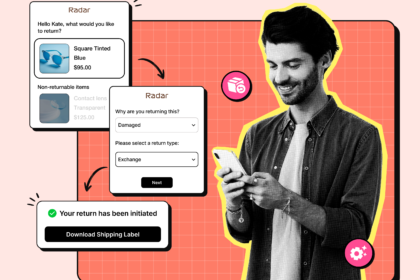
Exchange-first returns changes what the customer sees when they initiate a return. Instead of a refund form, they see an exchange option first. Not instead of a refund, in addition to one, but prominently, before the refund path. The brand is not taking anything away from the customer. It is showing them the resolution they may actually prefer before presenting the one that costs both parties the most.
What are exchange-first returns?
Exchange-first returns is a returns flow design in which a customer who initiates a return is shown an exchange option, for a different size, color, variant, or alternative product, as the first and most visible choice. The refund option exists in the same flow but appears after exchange and store credit options have been presented.
The logic is simple. Most returns are not product rejections. They are resolution requests. The customer received a size that did not fit, a color that looked different on screen than in person, or a product that did not meet a specific need they had. In many of those cases, the customer does not want a refund. They want the right product. A refund-first returns flow never asks them that question. It just processes the refund.
Exchange-first architecture asks the question. It presents the alternative before the exit. And when that alternative is right, the customer takes it, the brand retains the revenue, and both parties get a better outcome than the refund would have produced.
Why most returns become refunds by default
The returns flow is almost always designed around the refund. The “start a return” button leads to a reason selection, a label, and a refund confirmation. The exchange option, if it exists at all, is buried in a different part of the website or requires the customer to place a new order manually.
This design reflects how most returns platforms were built: as reverse logistics tools, not as revenue retention tools. The goal was to process returns efficiently, getting the product back, issuing the refund, restocking the item. The question of whether the customer might have preferred a different outcome was not part of the design brief.
The consequence is that brands are systematically defaulting to their most expensive outcome. A refund means the product comes back, the shipping goes both ways, the customer’s money leaves the brand’s account, and the customer is now unattached. An exchange means the customer stays, the revenue stays, and the shipping for the replacement is the only net cost.
According to LateShipment.com’s research, a significant share of returns in high-volume e-commerce categories, including apparel, footwear, and home goods, are size or variant issues rather than product dissatisfaction. These are the returns where an exchange would have been the customer’s preferred outcome if the option had been presented first and clearly.
Strategic Comparison: How exchange-first returns work in practice
The exchange-first returns flow has three layers, each presented in order before the customer reaches the refund option.
Layer 1: Instant exchange for a variant or alternative
The first option the customer sees when they initiate a return is an exchange for a different size, color, or alternative product from the catalog. The exchange is presented as immediate, zero friction, and the most visible path. If the customer wants a large instead of a medium, they select it here. The return label and the new order are processed together. No separate ordering flow. No waiting.
This layer catches the highest-intent exchange customers, the ones who clearly wanted the product and just needed the right version. According to LateShipment.com research, instant exchange options that require no additional steps from the customer convert at meaningfully higher rates than exchange options buried in secondary menus or requiring a new purchase flow.
Layer 2: Store credit with an incentive
The second option is store credit. Not a straight exchange of the return value for credit, but store credit with a small upside: 110% of the refund value, or a fixed bonus such as a free shipping credit on the next order.
This layer addresses the customers who are not sure what they want yet, or who do not want the same product in a different variant. They are not ready to commit to a specific exchange, but they are not done with the brand. A store credit with an incentive keeps them engaged and gives them a reason to come back. The 10% or 15% bonus is not a significant cost to the brand at the margin. The repeat purchase it produces almost always has a higher LTV impact than the refund would have.
The incentive does not need to be financial. Early access to new inventory, a loyalty tier boost, or a free gift with the next purchase all serve the same function: they make store credit more attractive than a refund for customers who are on the fence.
Layer 3: Refund
The refund option is always present. It appears after exchange and store credit have been shown. This is not a dark pattern. The customer who wants a refund can get one. The design is simply ensuring that the exchange option is seen and considered before the refund is processed.
The distinction from a manipulation perspective is transparency. The customer is not tricked or blocked. They are shown the full set of options in a sequence that reflects the brand’s preference, exchange first, while still honoring the customer’s right to a full refund if that is what they choose.
Return incentives and store credit: how to design them
The store credit layer is where most brands either miss the opportunity or over-engineer it. The incentive needs to be simple, clear, and valuable enough to be worth choosing over cash.
The right incentive size
A 5% bonus on store credit is unlikely to change most customers’ decision. A 15% bonus on store credit is often perceived as more valuable than the refund itself, particularly for customers who already have brand affinity. The sweet spot for most categories is 10 to 15% above the refund value. Higher than that and the cost starts to erode the margin benefit of avoiding the refund. Lower than that and the incentive is not compelling enough to shift behavior at scale.
The incentive size should vary by product category and average order value. A 10% bonus on a $200 return is $20 in store credit. That is a meaningful amount. A 10% bonus on a $30 return is $3. For low-AOV returns, a flat-dollar incentive, “$10 in store credit on your next order,” is more compelling than a percentage.
Expiry windows and urgency
Store credit with no expiry is a liability. Store credit with a short expiry creates pressure. The right balance is a window that creates mild urgency without feeling punitive: 90 to 120 days for most categories. Fashion and accessories can run shorter windows because purchase frequency is higher. Furniture and home goods may need longer windows because purchase cycles are slower.
Display the expiry date clearly on the store credit confirmation and in the follow-up email. “Your $45 store credit expires in 90 days” is both honest and effective at driving timely repeat purchase.
Automated exchange processing
Manual exchange processing defeats the purpose of exchange-first architecture. If a customer selects an exchange and then waits for a manual review before receiving their replacement, the friction of the exchange becomes comparable to the friction of placing a new order. The exchange option loses its advantage.
Automated exchanges, where the replacement order is generated and the return label is issued simultaneously without manual intervention, are the operational requirement for exchange-first returns to work at scale. OneReturn from LateShipment.com handles this automatically: instant label generation, automatic replacement order processing, and return status notifications at every stage, without requiring operations team involvement for standard exchange requests.
Why return reasons matter: the delivery connection most brands miss
Exchange-first architecture is most effective when the exchange option is calibrated to why the customer is returning. And that requires knowing whether the return is a product issue or a delivery issue.
According to LateShipment.com research, a meaningful share of returns in high-exception shipping categories are triggered by delivery failures rather than product dissatisfaction. A customer who received a damaged item, or whose order arrived two weeks late for an event it was needed for, is not a candidate for the standard exchange flow. They are a candidate for a different resolution: an immediate replacement with proactive protection, a direct apology with elevated credit, or a loss and damage claim handled automatically alongside the customer-facing resolution.
This is the distinction that standalone returns platforms cannot make, because they only see the return, not what happened to the shipment that caused it. LateShipment.com OneReturn sits inside the same platform as OneTrack, which means the returns layer has access to the delivery exception history for every order. A return reason of “arrived damaged” is automatically cross-referenced with the shipment record. If the carrier reported a handling exception, the claim process starts in the background. If the delivery was late, the return is tagged for a different incentive tier.
This calibration makes exchange-first returns more effective for the customer and more valuable for the brand. The right resolution for a sizing issue is a direct exchange. The right resolution for a damaged delivery is a replacement plus a carrier claim. Treating them identically leaves money on the table and gives customers a generic experience at the moment they need a specific one.
Who benefits from exchange-first returns, and how
| Team | How exchange-first returns changes the outcome |
|---|---|
| Finance | Refund volume drops as a percentage of total returns. Revenue retained per return increases. The net impact on gross margin is measurable within one to two quarters of implementation. Returns processing cost per unit decreases when automated exchanges replace manual review. |
| CX and support | Exchange-first returns generate fewer support contacts than refund-first flows, because customers who get the right product have fewer follow-up questions. Self-serve initiation removes the return request from the support queue entirely. Return status notifications eliminate status-check contacts. |
| Marketing | Exchange customers have higher repeat purchase probability than refund customers. Store credit customers return within the credit window at a rate that justifies the incentive cost. Post-return engagement flows can be triggered specifically for exchange customers to capture the next purchase. |
| Ecommerce and product | Structured return reason capture at scale surfaces sizing, fit, and product quality signals that inform buying decisions, size range expansion, and product description improvements. The data is more actionable than survey data because it is captured at the highest-intent moment. |
| Operations | Automated exchange processing reduces the manual workload of managing return requests. Intelligent warehouse routing directs returned items to the nearest facility based on condition and stock position, reducing reprocessing cost. |
How LateShipment.com OneReturn handles exchange-first returns
OneReturn is the returns and exchanges module within the LateShipment.com Post-Purchase Operating System. It is built for exchange-first architecture from the ground up, not retrofitted onto a refund-processing tool.
| Capability | What OneReturn does |
|---|---|
| Exchange-first presentation | Exchange for a different size, color, or item is the first and most prominent option shown when a customer initiates a return. The refund option appears after exchange and store credit have been presented. |
| Store credit with configurable incentive | Store credit is offered as a second option with a configurable bonus. The bonus percentage, flat-dollar amount, or alternative incentive is set by the brand. Expiry window is configurable per category. |
| Self-serve returns portal | Customers initiate returns using order number and email. No account login required. No support ticket needed. The portal sits on the brand’s domain. |
| Instant label generation | Return labels are generated and delivered to the customer automatically. No manual step or support handoff required for standard return and exchange requests. |
| Automated exchange processing | Replacement orders are generated automatically when the customer selects an exchange. The return and the replacement are processed together without manual operations team involvement. |
| Part-order and component-level returns | Customers can return a single item from a multi-item order without returning everything. A single broken component of a product can be returned independently. |
| Delivery exception integration | Return reasons are cross-referenced with delivery event history for the same order. Damage-related returns trigger claims automatically. Delivery-driven return patterns are flagged in the analytics layer. |
| Multi-warehouse intelligent routing | Returns are directed to the most appropriate warehouse based on item condition, stock position, and geography. Routing is automatic, not manual. |
| Return status notifications | Customers receive notifications at every stage: label issued, parcel received, exchange processed, store credit applied. No need to contact support for status. |
| Structured return reason capture | Every return generates a structured reason data point. The aggregated data surfaces product, sizing, carrier, and delivery trends in the reporting layer. |
Key takeaways
| Area | What to take away |
|---|---|
| Definition | Exchange-first returns is a returns flow where exchange for a variant is shown first, store credit with an incentive second, and refund third. The customer always has access to a refund. The design changes what they see first. |
| Why it works | Most returns are resolution requests, not product rejections. When the right resolution is shown first, a significant share of customers take it. The refund is often a default, not a preference. |
| Revenue impact | According to LateShipment.com research, exchange-first architecture converts 40% of would-be refunds into retained revenue. The store credit layer adds a second retention tier for customers not ready to exchange immediately. |
| Incentive design | Store credit works best with a 10 to 15% bonus above refund value. Flat-dollar bonuses outperform percentages on low-AOV returns. Expiry windows of 90 to 120 days create mild urgency without feeling punitive. |
| The delivery connection | Exchange-first only works well when return reasons are calibrated to cause. Delivery-driven returns need a different resolution than sizing returns. A connected platform that links delivery data to return data makes this calibration automatic. |
| OneReturn | LateShipment.com OneReturn handles exchange-first presentation, store credit incentives, automated exchanges, instant label generation, delivery exception cross-referencing, and intelligent warehouse routing in one connected returns platform. |
Frequently Asked Questions
Exchange-first returns is a returns flow design where the exchange option, for a different size, color, or product variant, is presented as the first and most visible choice when a customer initiates a return. Store credit with an incentive is the second option. The refund option is always available but appears after exchange and store credit have been shown. The design is not a restriction on customer rights. It is a sequencing decision that presents the resolution most customers actually want before presenting the one that costs both parties the most.
Most returns are not product rejections. They are resolution requests, the wrong size, the wrong color, a product that did not meet a specific need. When the exchange option is presented first and clearly, a significant share of customers who would have defaulted to a refund choose the exchange instead, because it is what they actually wanted. According to LateShipment.com research, exchange-first architecture converts 40% of would-be refunds into retained revenue. The reduction in refunds is not from restricting customer options. It is from presenting the right option first.
Four changes drive the conversion from refunds to exchanges. First, make exchange the first and most prominent option in the returns flow, not a secondary link or a separate process. Second, offer store credit with a small bonus, 10 to 15% above refund value, as a second option for customers who are not ready to exchange immediately. Third, automate the exchange process so that selecting an exchange requires no more steps than selecting a refund. Fourth, calibrate the exchange flow to return reason, because a sizing issue warrants an instant variant exchange while a delivery-related issue warrants a different resolution path.
A standard returns flow is designed around the refund. The customer selects a reason, receives a label, and receives a refund after the item is returned. Exchange may be an option, but it is typically not the default or the most visible path. An exchange-first returns flow presents exchange as the default first option. The refund is available but sequenced after exchange and store credit. The outcome difference is significant: brands using exchange-first returns retain a material share of return revenue that refund-first flows lose by default.
Store credit with an incentive, typically 10 to 15% above the refund value, works well as a second option after instant exchange and before cash refund. It addresses customers who are not ready to commit to a specific exchange but are not done with the brand. The incentive does not need to be financial. Early access to new inventory or a loyalty benefit can be equally effective depending on the customer segment. The key is presenting store credit as an option with clear upside, not as a restriction on the customer’s ability to get a refund.
The operational requirements are: a returns portal that supports exchange-first flow sequencing, automated exchange order processing so selecting an exchange does not require more steps than selecting a refund, instant return label generation, and configurable store credit incentives. Integration with the delivery experience layer is a significant advantage, because it allows return reasons to be cross-referenced with delivery exception history and routed to the appropriate resolution path. LateShipment.com OneReturn covers all of these capabilities within the LateShipment.com Post-Purchase Operating System.
Structured return reason data collected at scale surfaces the patterns that allow exchange incentives to be calibrated to cause. If 60% of returns in a specific product category are sizing issues, the exchange-first flow for that category should lead with the most direct variant exchange. If 20% of returns are delivery-related, those returns need a different resolution path. Return reason data also informs product decisions: sizing, fit, description accuracy, and packaging quality can all be improved when the return reason signal is structured and aggregated across thousands of transactions rather than collected through ad-hoc surveys.