


Quick answer
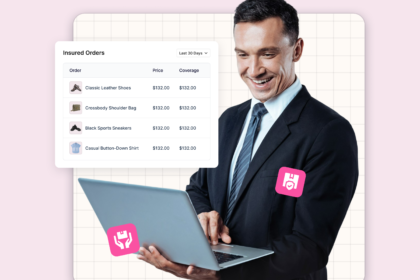
OneProtect is LateShipment.com’s merchant-led shipment protection module. It applies coverage automatically on qualifying shipments based on order value, carrier route history, product category, and destination risk, without requiring the customer to opt in at checkout. When a shipment is flagged as lost or damaged, OneProtect assesses coverage and initiates resolution immediately, at full product value, while OneAudit files the carrier claim in parallel. The result is faster customer resolution, full product value recovery, and no manual coordination between protection, claims, and carrier recovery.
Most shipping protection products work backwards. A shipment is lost. The customer contacts support. The brand files a claim. Evidence is gathered. The claim is reviewed. A partial reimbursement arrives weeks later, if the documentation was sufficient and the claim fell within the carrier’s liability limit.
That sequence is reactive by design. The customer waits. The brand absorbs the full resolution cost upfront while the claim process plays out. And the resolution the customer receives is not connected to whether the shipment was covered, what the carrier owes, or what the brand’s actual exposure is on that route and product category.
According to LateShipment.com research, brands managing lost and damaged shipments through disconnected protection tools and manual claim processes absorb between two and four times the refund value in total cost per incident, because the support overhead, the delayed carrier recovery, and the customer trust erosion are not counted against the same incident. OneProtect is built on a different premise: protection should be applied before the loss occurs, resolution should happen without the customer having to initiate it, and the carrier claim should run in parallel with the customer resolution, not after it.
What is OneProtect?
OneProtect is the shipment protection module within the LateShipment.com Post-Purchase Operating System. It provides merchant-led coverage on qualifying shipments, meaning the brand, not the customer, decides which shipments are protected and on what terms. Coverage is applied automatically based on configurable rules, without presenting insurance as an opt-in the customer must pay for at checkout.
OneProtect does not operate as an independent insurance product sitting outside the post-purchase stack. It sits inside the same platform as OneTrack, OneReturn, and OneAudit, which means it has access to real-time shipment data, carrier performance history, exception event signals, and return outcome data for every order it covers.
This data access is what makes OneProtect a protection-intelligence layer rather than a claims tool. It does not just pay out when things go wrong. It informs which shipments need coverage based on what is actually happening across the carrier network, which routes are generating elevated exception rates, and which product categories have historically high loss and damage profiles.
How OneProtect works: three stages for every covered shipment
OneProtect operates across three stages for every covered shipment: coverage assessment before the loss, resolution at the moment of the incident, and parallel carrier recovery after the resolution.
Stage 1: Pre-shipment coverage assessment
Before a shipment leaves the warehouse, OneProtect evaluates whether it qualifies for coverage based on a configurable rule set the brand controls. The primary inputs to the coverage decision are:
- Order value: shipments above a configurable threshold are automatically covered.
- Carrier route performance: routes with elevated exception rates in the OneAudit and OneTrack data receive higher protection priority.
- Product category: categories with historically high loss or damage rates, such as electronics, high-value apparel, fragile goods, and perishables, are flagged for coverage.
- Destination risk: destinations with higher last-mile failure rates or international routes with complex customs handling receive elevated protection consideration.
The brand configures the logic. OneProtect applies it automatically to every qualifying shipment without requiring a manual coverage decision per order.
Stage 2: Incident detection and automatic resolution
When OneTrack detects a delivery exception on a covered shipment, the signal flows to OneProtect immediately. The coverage status of the shipment is already on file. The assessment does not require a new manual review.
For loss events, such as a shipment confirmed missing past the expected delivery window or a carrier-reported lost-in-transit status, the resolution is initiated automatically. The customer receives a proactive notification, often before they have noticed the issue or contacted support. The replacement or refund is issued at full product value, not capped at the carrier’s standard liability limit.
For damage events, the customer is prompted to report the damage through the LateShipment.com tracking page. The structured photo capture flow collects the documentation in the right format for carrier claim submission at the moment the customer reports the issue, when the item and packaging are still in their possession. The agent handling the incident sees the full context, including coverage status, carrier exception data, and claim eligibility, in one view.
Stage 3: Parallel carrier claim recovery
Once the customer resolution is issued, OneAudit identifies whether the incident qualifies for a carrier claim under service guarantee terms. For lost shipments, for carrier-damaged shipments, for outbound, inbound, and return-label parcels. The claim is filed automatically within the carrier’s 15-day eligibility window. According to LateShipment.com research, the majority of carrier-eligible claims for lost and damaged shipments are never filed because no systematic trigger connects the resolved customer incident to the carrier claim process. OneAudit provides that trigger automatically.
The carrier recovery runs alongside the customer resolution, not in sequence after it. The brand does not wait for the carrier claim to be resolved before issuing the replacement. Protection covers the full product value upfront. The carrier claim recovers whatever the carrier owes under their terms. Both outcomes are tracked in the same platform.
How OneProtect fits into the Post-Purchase Operating System
OneProtect is not an add-on to the LateShipment.com platform. It is one of four interconnected modules that share a data layer, and its effectiveness depends on that connection.
| Data connection | What it enables for OneProtect |
|---|---|
| OneTrack to OneProtect | Real-time exception detection feeds the coverage assessment. When OneTrack flags a shipment as lost or at elevated risk, OneProtect knows immediately whether it is covered and initiates the resolution workflow without a separate trigger. |
| OneAudit to OneProtect | Carrier route performance data from invoice auditing informs the protection rules. Routes with elevated SLA failure rates, high exception frequencies, or recurring damage patterns receive higher coverage priority automatically. |
| OneProtect to OneAudit | When OneProtect resolves a loss or damage incident, it triggers the carrier claim assessment in OneAudit. The claim is filed within the carrier’s eligibility window as part of the same incident workflow, not as a separate manual process. |
| OneProtect to OneReturn | Damage-related returns are flagged with their protection status. Return routing decisions can account for whether the item is covered, what its recovery value is, and whether a carrier claim is in progress for the same shipment. |
| OneProtect to OneInsight | Loss and damage rates by carrier, route, product category, and destination feed into the reporting layer. Finance teams see protection costs and carrier recovery amounts in the same view as shipping spend and refund recovery. |
The practical implication is that OneProtect is not being asked to operate on its own assessment of risk. It is drawing on the carrier performance intelligence that OneAudit generates, the real-time shipment monitoring that OneTrack provides, and the return outcome data that OneReturn captures. Each module makes every other module more accurate.
What changes for each team when OneProtect is in place
| Team | What changes |
|---|---|
| CX and support | Lost and damaged incidents are surfaced to the team before customers contact support. The agent sees coverage status, carrier exception data, and resolution options in one view. Resolution is initiated without requiring the customer to submit documentation and wait. CSAT on loss and damage incidents improves because the customer experience is proactive, not reactive. |
| Operations | Coverage assessment is automatic, not manual. No per-order protection decisions required from the ops team. Carrier claim filing happens automatically within the 15-day window without ops team involvement. Replacement workflows for covered incidents are pre-defined by the brand’s configuration rather than improvised per incident. |
| Finance | The financial exposure on lost and damaged shipments is bounded by coverage rather than unlimited per incident. Carrier claim recovery runs in parallel and is tracked against the same incident, not as a separate accounting entry months later. Loss and damage rates by carrier and route are visible in the same reporting environment as shipping spend and refund recovery, enabling cost-informed carrier selection and negotiation. |
Key takeaways
| Area | What to take away |
|---|---|
| What OneProtect is | Merchant-led shipment protection that applies coverage automatically on qualifying shipments based on configurable risk rules. No customer opt-in required. Full product value recovery for lost and damaged shipments. |
| What makes it different | OneProtect sits inside the LateShipment.com Post-Purchase OS and draws on carrier route performance data (OneAudit) and real-time exception detection (OneTrack) to inform coverage decisions and trigger resolution automatically. |
| How resolution works | When OneTrack detects a loss or damage exception on a covered shipment, OneProtect initiates resolution immediately, often before the customer notices. The customer receives full product value. OneAudit files the carrier claim in parallel. |
| The carrier claim connection | Protection covers the brand’s cost of resolution. The carrier claim recovers whatever the carrier owes. Both happen for the same incident, in parallel, without manual coordination. According to LateShipment.com research, most brands file neither systematically. |
| Who it changes outcomes for | CX teams handle fewer reactive loss and damage contacts. Ops teams no longer make per-order protection decisions. Finance teams see bounded exposure and parallel carrier recovery in the same reporting view. |
Frequently Asked Questions
OneProtect is LateShipment.com’s merchant-led shipment protection module. It applies coverage automatically on qualifying shipments based on configurable rules: order value, carrier route performance, product category, and destination risk. Coverage is not an opt-in for the customer. It is applied by the brand before the shipment leaves the warehouse. When a shipment is flagged as lost or damaged, OneProtect assesses coverage and initiates resolution immediately, at full product value, while OneAudit files the carrier claim in parallel.
OneProtect works in three stages. Before shipment: coverage rules are applied automatically to qualifying orders based on the brand’s configuration. On exception detection: when OneTrack identifies a loss or damage event on a covered shipment, OneProtect triggers the resolution workflow immediately, without requiring the customer to file a report or contact support first. In parallel: OneAudit identifies and files the carrier claim for the same incident within the 15-day eligibility window. The customer gets a proactive resolution. The brand gets parallel carrier recovery. No manual coordination is required between the three stages.
The trust improvement comes from timing. In a reactive protection model, the customer discovers the loss or damage, contacts support, submits documentation, and waits for a resolution. In the OneProtect model, the brand detects the exception before the customer notices, notifies the customer proactively, and initiates the replacement or refund without requiring them to start the process. A customer who receives a notification that their lost shipment is already being handled has a meaningfully different emotional experience than one who has to chase the brand for a resolution. According to LateShipment.com research, customers who receive proactive resolution on loss and damage incidents have significantly higher repeat purchase rates than those who experience the same incidents handled reactively.
No. OneProtect is merchant-led, meaning the brand applies coverage automatically based on configurable rules. The customer does not see an insurance option at checkout, does not choose whether to pay for coverage, and does not need to take any action for their shipment to be protected. Merchant-led protection ensures consistent coverage across all qualifying shipments, not just the orders where the customer happened to opt in.
OneProtect covers lost shipments, confirmed missing past the expected delivery window, and damaged shipments, including carrier-handling damage reported through the LateShipment.com tracking page. Coverage extends to outbound shipments, inbound shipments, and return-label parcels. The recovery amount is full product value, not capped at the carrier’s standard liability limit of $100 for standard FedEx and UPS Ground. Coverage applies to shipments that meet the brand’s configured eligibility criteria.
When OneProtect resolves a loss or damage incident, it triggers the carrier claim assessment in OneAudit. OneAudit identifies whether the incident qualifies for a carrier claim under service guarantee terms and files the claim automatically within the 15-day eligibility window. The carrier recovery runs alongside the customer resolution, not after it. The brand does not wait for the carrier claim outcome before issuing the replacement. Protection covers the customer upfront. Carrier recovery recovers whatever the carrier owes. Both are tracked in the same platform.
Carrier declared value coverage extends the carrier’s liability limit on individual shipments. It requires explicit declaration at shipping time, applies only to carrier-caused losses within the carrier’s definition, and the recovery process goes through the carrier’s claims timeline, which can take weeks. OneProtect covers full product value immediately upon a confirmed loss or damage event, regardless of the carrier’s liability limit. The resolution is issued before the carrier claim is resolved. And OneAudit files the carrier claim in parallel to recover whatever the carrier owes under their terms. The customer and the brand are not held to the carrier’s timeline for resolution.