

Quick Answer
E-commerce package protection comes in two forms: shopper opt-in, where customers pay a small checkout fee for coverage, and merchant-led, where the brand automatically covers every shipment. The opt-in model leaves unprotected orders as an open liability. The merchant-led model eliminates that exposure entirely and keeps the resolution experience inside the brand. For operations leaders managing delivery failure at scale, merchant-led protection is the operationally sound choice.
Lost and damaged shipments are not edge cases. According to research from LateShipment.com, one in ten parcels encounters a delivery exception, a delay, a damage event, or a failed delivery attempt before it reaches the customer. Across high-volume shippers, that adds up to a predictable and recurring financial exposure, not an occasional bad week. The question is not whether your brand will face lost or damaged shipments. The question is which operational model you have in place when it happens.
Two frameworks exist for covering that exposure: shopper opt-in insurance, where the customer decides at checkout whether to pay for coverage, and merchant-led protection, where the brand funds blanket coverage automatically across every shipment. The choice between them is not just a procurement decision. It determines your chargeback exposure, your support ticket volume, your customer lifetime value retention rate, and who controls the resolution narrative when something goes wrong.
The Two Models: How They Actually Work
Shopper Opt-In Insurance
The opt-in model inserts a widget into the checkout flow. The customer sees a small fee, typically a fixed amount or a percentage of cart value, and chooses whether to pay it for coverage. Platforms that run on this model, such as Redo, often bundle the insurance with return portal perks to make the opt-in more attractive. When a covered order is lost or damaged, the customer files a claim through a portal for resolution.
The mechanics are straightforward. The complications start when the customer declines.
Merchant-Led Protection
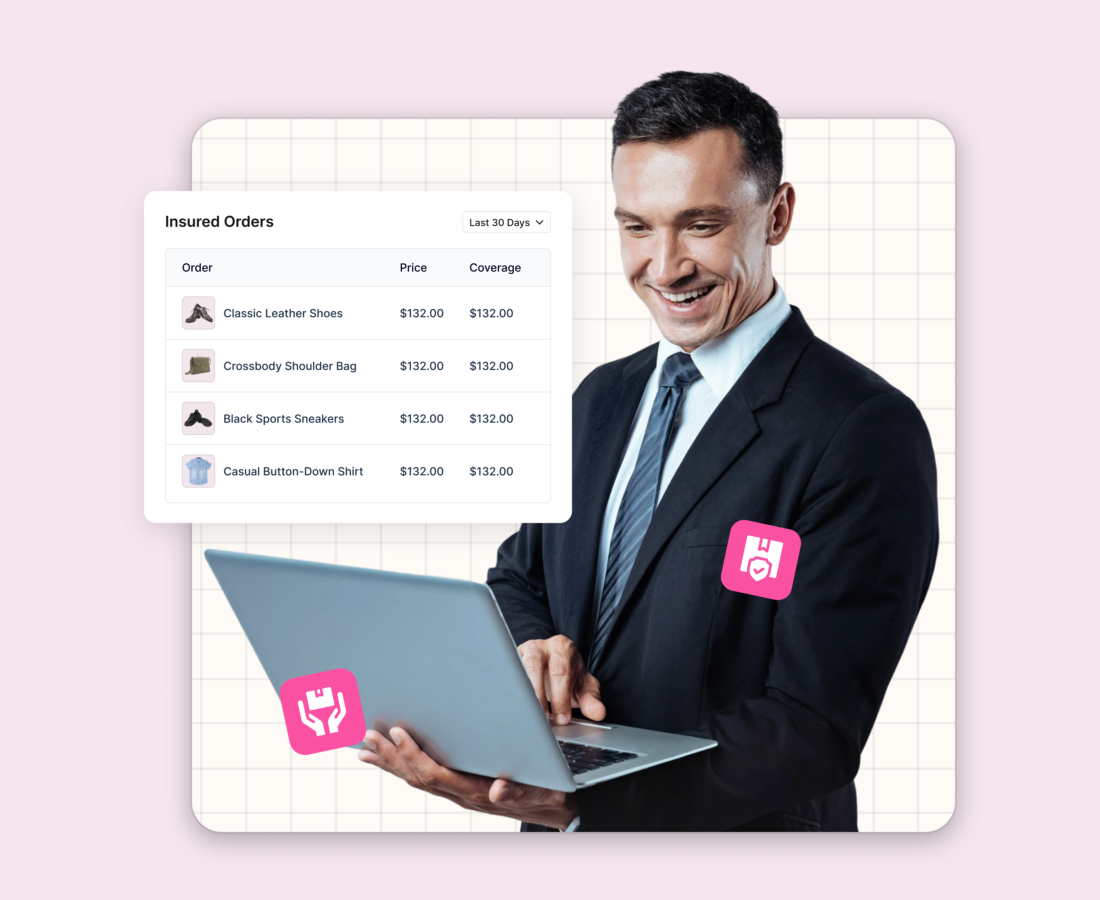
The merchant-led model removes the customer from the decision entirely. The brand funds a blanket premium that covers every outgoing shipment automatically. No widget, no checkbox, no extra fee visible at checkout. When a delivery failure occurs, the brand handles the resolution directly and recovers the cost through the coverage, without routing the customer through a third-party claims portal.
OneProtect by LateShipment.com operates on this model. Coverage is applied at the shipment level, claims are processed centrally, and the resolution experience stays inside the brand.
Strategic Comparison: Operational Dimensions
The table below maps the key operational differences. Each dimension has a direct consequence for operations and CX teams.
| Operational Dimension | Shopper Opt-In (e.g., Redo) | Merchant-Led (OneProtect) |
|---|---|---|
| Checkout Experience | Introduces a fee and decision point for the customer. | Zero checkout impact, no widget, no fee visible to the customer. |
| Coverage Scope | Only opted-in orders are protected. | 100% of shipments are covered automatically. |
| Brand Ownership | Third-party widget and portal handles claims. | Merchant owns the full resolution narrative. |
| Chargeback Exposure | Unprotected orders still generate chargebacks. | Every delivery failure is covered, eliminating unprotected exposure. |
| Support Ticket Impact | Ops team must handle complaints from unprotected orders anyway. | Fewer delivery-related contacts because every issue has a resolution path. |
| Customer LTV Risk | Opted-out customer still blames the brand, and the brand absorbs the loss. | Resolution is fast, brand-controlled, and does not depend on whether the customer opted in. |
The Structural Vulnerability in the Shopper Opt-In Model
The opt-in model presents a clean value proposition on paper: let customers who want coverage pay for it and keep your own costs down. In practice, it creates a liability that operations teams absorb directly.
When a customer opts out and the carrier subsequently loses the package, the operations or support team faces two outcomes, and both are negative.
- Refuse assistance because the customer opted out. This destroys customer lifetime value and generates a chargeback anyway.
- Absorb the replacement or refund cost out of pocket. This makes the third-party insurance software irrelevant for that transaction, the brand paid twice, once for the platform and once for the resolution.
Neither outcome is acceptable at scale. The opt-in model does not reduce your financial exposure to delivery failure. This reduces your exposure to only the subset of orders where the customer said yes. The rest lands back on your team.
There is also a conversion-rate implication. Asking a customer to pay extra for successful delivery is an implicit signal that your standard shipping is unreliable. According to LateShipment.com research, checkout friction introduced by optional insurance widgets contributes to cart abandonment in a meaningful share of high-value orders, precisely the segment where delivery failure is most costly.
Why Merchant-Led Protection Holds Up Operationally
Every shipment is covered, no exceptions to manage
When coverage is automatic and universal, the operational decision tree simplifies. Every delivery failure has a resolution path. Your team does not need to check whether a particular order was protected before deciding how to handle a customer contact.
The Accountability Deficit
When you place a shopper opt-in widget at checkout, you are effectively shifting the responsibility of safe delivery from your business onto your customer. This framework signals a critical operational flaw: an unwillingness to take full accountability for the end-to-end purchasing experience.
If a package is lost or stolen, routing a frustrated customer through a third-party portal to fight for a replacement detaches your brand from the solution. Conversely, merchant-led coverage embraces complete delivery accountability. By protecting every shipment automatically, your brand stands behind its promise, takes direct ownership of errors, and earns absolute loyalty by fixing issues immediately.
According to LateShipment.com’s research, brands that own the delivery issue resolution experience, rather than routing customers through third-party claims portals, see materially higher post-resolution satisfaction scores and repeat purchase rates.
Chargeback exposure drops to near zero
Every unprotected delivery failure is a potential chargeback. When coverage is universal, there are no unprotected orders. The financial exposure that would otherwise sit in your accounts receivable as disputed charges gets absorbed by the protection model instead.
Support ticket volume decreases
Delivery-related contacts, questions about lost packages, damage claims, missing items, are one of the highest-volume contact drivers in e-commerceCX. Merchant-led protection does not just fund the resolution; it reduces the friction in getting to one. Claims processed automatically, without requiring the customer to navigate a third-party portal, generate fewer follow-up contacts. LateShipment.com brands using OneProtect see measurable reductions in delivery-related support volume.
Which Model Fits Which Operation
The shopper opt-in model can make sense for very early-stage brands that need to pass protection costs directly to customers before they have the margin to absorb them. It is a cost-deferral mechanism, not a CX strategy.
For mid-market and scaling brands, the calculus shifts. The support cost of handling unprotected order complaints, the chargeback exposure, the LTV erosion from poor post-delivery experiences, and the conversion impact of a checkout friction point together outweigh the per-shipment premium cost of merchant-led coverage. At meaningful volume, merchant-led protection often pays for itself through chargeback reduction alone.
According to LateShipment.com’s research, mid-market e-commerce brands processing more than 5,000 shipments per month recover more in chargeback prevention and repeat purchase retention from merchant-led coverage than they spend on the premium, making it a net-positive P&L decision, not a cost center.
Brands already running LateShipment.com’s Post-Purchase Operating System have an operational advantage here: OneProtect integrates directly with OneTrack and OneAudit. Delivery data, carrier performance patterns, and claims history feed into protection decisions automatically, so high-risk routes, product types, or carrier combinations can be prioritized for coverage without manual configuration.
Key Takeaways
| Dimension | Key Takeaway |
|---|---|
| Coverage completeness | Shopper opt-in leaves unprotected orders as an open liability. Merchant-led coverage closes that gap entirely. |
| Support ticket impact | Opted-out customers still contact the brand after a delivery failure. Merchant-led coverage provides a resolution path for every order. |
| Chargeback exposure | Every unprotected shipment is a potential chargeback. Universal coverage eliminates this exposure. |
| Brand control | Third-party opt-in portals own the resolution experience. Merchant-led models keep it inside the brand. |
| Conversion rate | Checkout widgets that ask customers to pay extra for successful delivery introduce friction. Merchant-led coverage removes the question entirely. |
| P&L case | At meaningful shipping volume, chargeback prevention and LTV retention from merchant-led coverage typically offset the premium cost. |
Frequently Asked Questions
Merchant-led package protection is a model in which the brand automatically covers every outgoing shipment against loss or damage without asking the customer to opt in or pay extra at checkout. The brand funds the premium and handles claim resolution directly.
Shopper opt-in shipping insurance is a checkout widget that lets customers choose to pay a small premium for coverage. Orders where the customer declines are not protected, creating a liability for the brand when those orders encounter delivery failures.
Offering shipping protection as a customer-paid checkout add-on introduces friction and leaves unprotected orders as an ongoing support and chargeback liability. Merchant-led coverage applied automatically to every shipment eliminates that exposure and removes the checkout decision point entirely.
Even when a customer declines coverage at checkout, most brands still absorb the replacement or refund cost to protect customer lifetime value. The opt-out does not remove the merchant’s liability, it only removes the coverage that would have funded the resolution.
OneProtect is a merchant-led model: the brand funds blanket coverage across every shipment automatically, without a checkout widget or customer decision point. Redo and similar tools operate on a shopper opt-in basis, leaving unprotected orders as a liability. OneProtect also integrates with OneTrack and OneAudit, so delivery and carrier data inform protection decisions in real time.
Yes. When every shipment is covered and claims are processed automatically, the operational overhead of handling delivery-related contacts drops significantly. Brands using LateShipment.com see measurable reductions in delivery-related support volume from month one.