

Key Takeaways
- Refunds are out, surcharges are in. Peak-season money-back guarantees are suspended, while 2025 demand/holiday surcharges raise the cost per shipment.
- Delays destroy margin. Late orders trigger reships, appeasements, WISMO load, higher returns, negative reviews, and lower lifetime value—often outweighing surcharge line items.
- Promise + calendar control. Use realistic delivery windows and clearly published cut-offs; pull promos forward to shift volume to cheaper services without risking gifting deadlines.
- Proactive tracking prevents losses. Real-time visibility and exception playbooks (scan gaps, dwell, address confirm, pickup/reschedule) convert “at-risk” into delivered.
- Audit what you can control. Cut DIM/address/zone fees, reserve premium shipping for gift-critical SKUs, favor exchanges over refunds and use LateShipment.com to operationalize it at scale.
Introduction
By now, every e-commerce operator knows the deal: money-back guarantees are suspended across major carriers throughout peak season. UPS and FedEx have made it clear that late deliveries won’t come with automatic refunds. But here’s the thing, while guarantees disappeared, holiday shipping surcharges for 2025 are alive and well. Carriers are still charging demand surcharges for larger parcels, longer zones, and peak-period volume. You’re paying more per shipment while getting less protection when things go wrong.
This creates a new calculus. Late deliveries still cost you money through expedited reships, customer appeasements, and support overhead from anxious shoppers tracking their orders. But you can’t count on carrier refunds to offset those losses anymore. The path forward isn’t about chasing refunds that don’t exist. It’s about managing shipping costs proactively and preventing late deliveries before they happen through smarter routing, realistic promises, and airtight audit controls that catch the fees you can actually control.
The cost of delays in the peak
A single late package sets off a cascade of expenses that hit harder than any surcharge line item. First come the immediate costs: expedited reships to save the order, appeasement credits to calm frustrated customers, and a surge in customer service load as WISMO tickets pile up. But the real damage runs deeper and lasts longer.
Missed gifting deadlines don’t just frustrate customers, they erode trust and customer lifetime value in ways that are hard to quantify but easy to feel. Someone who ordered a birthday gift that arrived three days late isn’t just annoyed. They’re less willing to buy from you again, especially when timing matters. They leave negative feedback that makes it harder to attract new customers who are comparing you against competitors with cleaner delivery records. Return rates spike because packages that arrive too late lose their purpose, and you’re stuck processing returns or cancellations for inventory you’ve already paid to ship twice.
These hidden costs stack up fast and often exceed the surcharges you’re trying to avoid. That’s why the winning play for 2025 isn’t fighting for refunds that don’t exist anymore. It’s preventing delays upfront and controlling the avoidable fees that quietly drain margin while you’re focused elsewhere.
Your 2025 prevention playbook
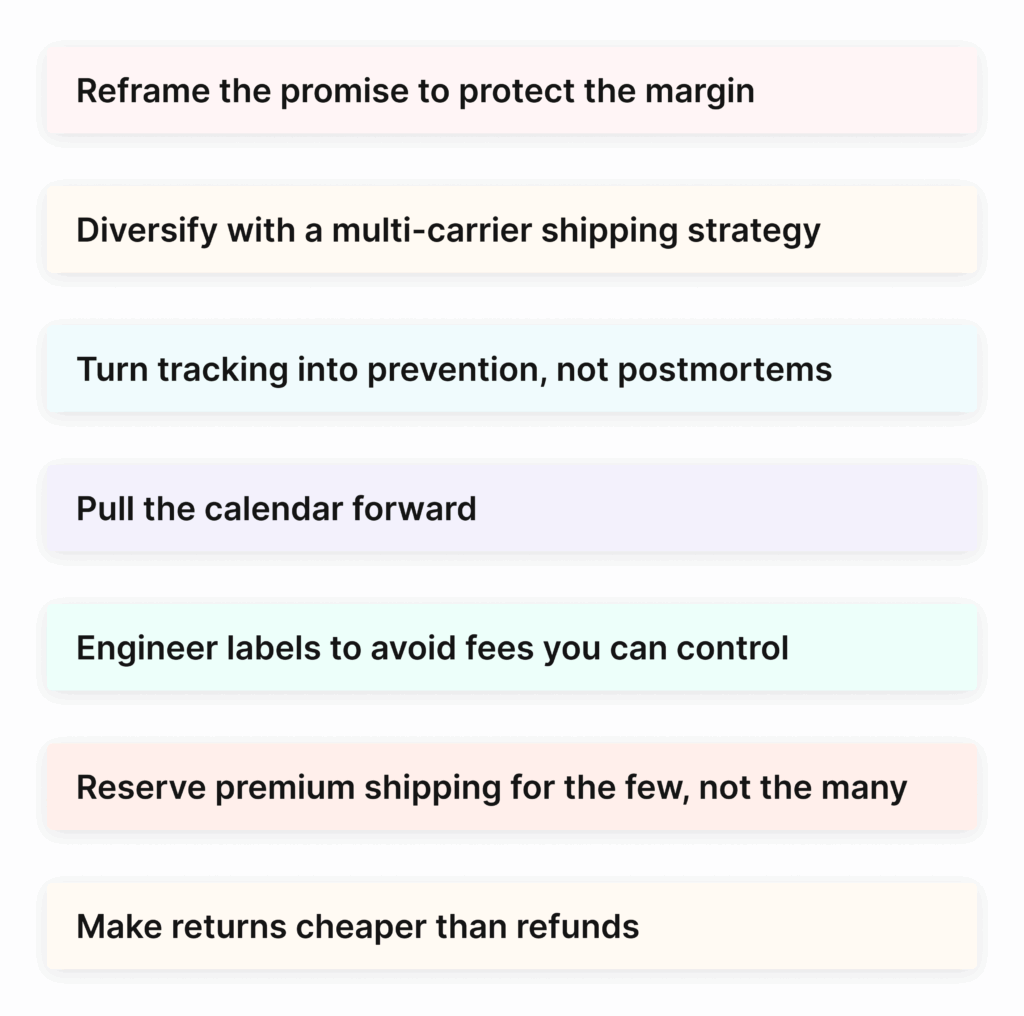
1) Reframe the promise to protect the margin
Replace hard guarantees with realistic delivery windows and publish holiday shipping cut-offs by service level and region at checkout. Right-sized promises lower appeasements and reships while improving conversion through clear expectations. When customers know exactly when to expect their package, they’re less likely to panic and more likely to complete the purchase.
2) Diversify with a multi-carrier shipping strategy
Contract at least two national carriers plus a postal or hybrid option, then add regional carriers for dense corridors. Route each shipment based on lane performance, zone, DIM weight, and cost rather than defaulting to a single carrier. This approach reduces overuse of premium air services and helps you dodge congestion when one network hits capacity limits.
3) Turn tracking into prevention, not postmortems
Monitor scan gaps, depot dwell times, and exception codes in real time so you can act before packages go sideways. When risk rises, trigger proactive delivery notifications like address confirmation, pickup-at-location offers, or concierge reschedule options. These interventions convert at-risk shipments to successful deliveries, cutting refunds, reships, and support costs before they hit your P&L.
4) Pull the calendar forward
Move your promos earlier in the season and advance holiday cut-offs by 24 to 48 hours on slower lanes. Incentivize economy services for early shoppers who aren’t racing the clock. This strategy means fewer last-minute premium upgrades eat your margin and smoother fulfillment operations when volume peaks.
5) Engineer labels to avoid fees you can control
Reduce DIM weight by investing in right-sized packaging SKUs that match your actual products. Use zone-skipping or regional hubs to shorten the distance your packages travel. Enforce address validation at checkout to cut correction fees and return-to-sender waste. Each of these changes lowers peak season surcharges, mislabel fees, and long-zone costs that quietly drain profit.
6) Reserve premium shipping for the few
Gate Next-Day and 2-Day services for gift-critical SKUs and late buyers who truly need speed. Bundle premium options with shipping protection or minimum order thresholds to offset the cost. This controls your exposure to expensive air premiums while keeping the promises that matter most to high-value customers.
7) Make returns cheaper than refunds
Default to exchange-first returns, extend windows for gift recipients, and offer store credit incentives that keep revenue in-house. Generate return labels and QRs only when customers actually need them, not automatically with every order. This approach converts disappointment into retained revenue and lowers return processing costs across the board.
How LateShipment.com operationalizes this playbook
When late-delivery refunds are suspended, operational control protects profit better than carrier policy ever will. OneTrack gives you branded tracking and alerts with real-time shipment visibility, predictive ETAs, and proactive exception management to cut WISMO tickets and stop losses before they happen. OneAudit runs automated shipping invoice audits that recover 6 to 20 percent from billing errors, accessorials, and peak season surcharges you can actually control. OneProtect handles lost and damaged claims through a fast, trackable workflow that limits margin leakage from unavoidable exceptions. OneReturn powers exchange-first returns with self-serve management that retains revenue and reduces support drag.
Bottom line: In holiday shipping 2025, you save costs by promising smarter, routing smarter, and auditing harder. LateShipment.com makes each step repeatable at scale.
Frequently Asked Questions
1) Are late-delivery refunds suspended for the 2025 peak?
Yes—plan as if money-back guarantees won’t apply during the holiday rush.
2) How do I cut costs without refunds?
Prevent misses: set delivery windows, publish cut-offs, move promos earlier, route multi-carrier by lane performance, and enforce fee hygiene (DIM, address validation, zone-skipping).
3) What’s the best way to set holiday cut-offs?
Use service-/region-specific windows (not hard guarantees) across PDP, checkout, and emails to reduce appeasements while maintaining conversion.
4) What does a strong multi-carrier setup look like?
At least two nationals plus a postal/hybrid, with regionals for dense corridors—then auto-route by cost, zone, DIM, and on-time performance per lane.
5) How does tracking actually prevent late deliveries?
By flagging scan gaps/dwell and triggering proactive actions (address confirm, hold-for-pickup, reschedule) before a shipment turns into a reship/refund.
6) Fast wins to lower fees right now?
Right-size packaging to cut DIM, validate addresses at checkout, use zone-skipping/regional hubs, reserve Next-Day/2-Day for gift-critical SKUs, and default to exchange-first returns.
Related Readings
Monthly Newsletter
Get practical solutions and insights to tackle real-world post-purchase challenges directly in your inbox