


Quick answer:
Reverse logistics is the broader process of moving goods backward through the supply chain: from customer back to warehouse, refurbishment, resale, or disposal. Returns management is one specific part of that process: handling the customer-facing request, the authorization, the return shipment, and the resolution. Every return goes through returns management. Not everything in reverse logistics comes from a customer return.
Key Takeaways
- Reverse logistics is the umbrella: It covers customer returns, unsold inventory, product recalls, end-of-life disposal, and refurbishment. Returns management sits inside it: specifically focused on customer-initiated product returns.
- Returns management is ops-facing and customer-facing: It covers the front end (customer initiates return, gets a label, gets a refund) and the back end (item received, inspected, routed, processed). Reverse logistics picks up from there: what happens to the item post-return.
- Cost split: Returns management costs tend to sit in operations and customer service budgets. Broader reverse logistics costs: refurbishment, resale channel management, and disposal sit in supply chain and inventory budgets.
- Automation opportunity: Returns management is highly automatable with software. Broader reverse logistics processes, like deciding how to refurbish items and where to sell them again, need more specialized systems or human decision-making
- Why operations teams need to own both definitions: Confusing the two leads to misaligned KPIs: ops teams measured only on return rate miss the cost of what happens to returned inventory. The two need to be tracked together.
Returns are a big part of handling an e-commerce business. Here is why returns management and reverse logistics should be a top priority for your operations team.
Returns management plays a major role in handling product returns, and a well-designed returns system can improve both your operations and customer experience. But it is frequently confused with the broader concept of reverse logistics: and that confusion leads to misaligned priorities, incomplete KPIs, and missed cost-reduction opportunities.
What is Reverse Logistics?
Reverse logistics refers to collecting, transporting, and inspecting goods, then determining if they are to be recycled, refurbished, resold, or disposed of. The ‘reverse’ refers to the direction of goods movement: back through the supply chain, from the end consumer or retail channel toward the manufacturer or distributor.
Reverse logistics is broader than customer returns. It includes:
- Customer returns: products sent back by shoppers after purchase
- Unsold retail inventory: products returned from retailers to distributors or manufacturers
- Product recalls: safety or quality-driven retrieval of products from market
- End-of-life product collection: electronics recycling programs, lease returns, etc.
- Refurbishment and remanufacturing: returned items restored and resold
- Asset recovery: recovering residual value from returned or excess inventory
What is Returns Management?
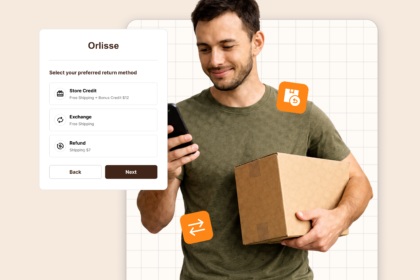
Returns management is the specific process of handling customer-initiated product returns. It manages this process from the initial return request to the final resolution: whether that be a refund, exchange, or store credit.
Returns management covers:
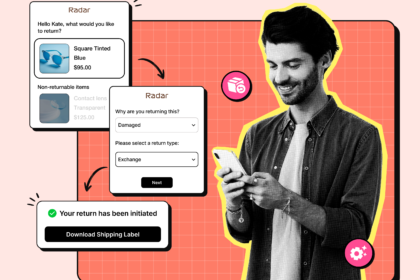
- Receiving and reviewing the return request
- Validating the request against return policy rules
- Authorizing the return and generating a return label
- Tracking the inbound return shipment
- Receiving and inspecting the returned item at the warehouse
- Processing the resolution: refund, exchange, store credit, or partial refund
- Updating inventory records
- Communicating status to the customer throughout
Key Differences Between Returns Management and Reverse Logistics
Reverse logistics and returns management go hand-in-hand— you cannot really have one without the other. However, the two are distinct, and it is important to understand the key differences between returns management vs. reverse logistics.
How They Work Together in E-Commerce Operations
| Dimension | Reverse Logistics | Returns Management |
|---|---|---|
|
Scope |
Broad: all backward goods movement |
Narrow: customer-initiated returns only |
|
Who initiates it |
Business (recalls, EOL, rebalancing) or customer (returns) |
Always the customer |
|
Key processes |
Collection, transport, inspection, refurb, resale, disposal |
Authorization, label generation, tracking, resolution, inventory update |
|
Primary KPIs |
Recovery rate, cost per unit, refurb conversion rate |
Return rate, processing time, resolution time, cost per return |
|
Automation maturity |
Partial: routing and tracking automatable; disposition often manual |
High: fully automatable end-to-end with software like LateShipment.com |
|
Customer visibility |
Usually none: happens behind the scenes |
High: customer expects status updates and rapid resolution |
In practice, every customer return is a handoff point between returns management and reverse logistics. Returns management handles the customer-facing process: initiation, authorization, label, tracking, resolution. Once the item is back at the warehouse and inspected, reverse logistics takes over: is the item resellable as-is? Does it go to refurbishment? Is it marked for disposal?
For operations teams, this means you need clear handoff protocols between the two. The returns management system should record the condition of each returned item at inspection, so that downstream reverse logistics decisions are data-driven rather than ad hoc.
What Operations Teams Should Automate First
If you are prioritizing where to focus automation investment, automating returns management is the higher-ROI starting point for most e-commerce operations teams. It is more customer-facing, more repetitive, more labor-intensive on a per-transaction basis, and more directly tied to customer satisfaction metrics.
Reverse logistics, specifically the routing of returned items to the right disposition channel, is the natural second phase once returns management is running smoothly.
LateShipment.com’s Returns Management Software is a simple way to manage returns for your e-commerce business, automating the process for you and your customers. Flexible routing, easy management dashboards, and direct integration into your existing stack: all without requiring a complete overhaul.
Conclusion
Customers increasingly demand convenience, transparency, and efficiency when dealing with e-commerce businesses. Poorly functioning reverse logistics and returns management can potentially break your online business’s operations. They could also drive customer loyalty, satisfaction, and retention when done right. In short, don’t take them lightly!
Are you looking to improve your reverse logistics and returns management? That’s where LateShipment.com comes in. We help businesses optimize their processes, have a smooth and streamlined returns process, and automate several processes. Are you ready to make your returns the easiest part of managing your business? Let LateShipment.com deal with the logistics while you focus on growth. Book a demo with us today to get started!
FAQS
- What is the difference between returns and reverse logistics?
Reverse logistics refers to collecting, transporting, and inspecting goods, then determining if they are to be recycled, refurbished, resold, or disposed of. On the other hand, returns management manages this process and refers mainly to sending a product back to the seller, inspecting it, and issuing a refund.
2. What are the three pillars of return management?
The main three pillars of return management include speed, visibility, and control. This can be done by automating your workflows, generating shipping labels, providing regular customer updates, and ensuring compliance with regulatory measures.
3. How can businesses improve their returns management process?
Some ways to improve the returns management process include:
- Create a streamlined process
- Properly document the entire process
- Have a well-trained customer support team
- Employ a dedicated returns management team
- Ensure transparency throughout the process
- Make sure the return is handled quickly
4. How does returns management affect customer loyalty?
Significantly. 92% of consumers say they would buy from the same brand again if the returns process is easy. A slow, confusing, or opaque returns process is one of the fastest ways to lose a repeat customer. Returns management automation directly improves the customer experience by making the process self-serve, transparent, and fast.