
Key Takeaways
- Showing accurate, AI-powered delivery dates on product and checkout pages directly reduces cart abandonment by giving shoppers the certainty they need to complete a purchase
- Order countdown timers tied to delivery cutoffs create genuine urgency without relying on discount pressure
- Automated shipping insurance removes the post-purchase anxiety that quietly stops first-time shoppers from converting
- Shopper opt-in insurance puts loss and damage protection in the customer’s hands at checkout, increasing confidence at the exact moment hesitation peaks
- A replacement guarantee for lost or damaged packages eliminates one of the biggest psychological barriers to buying from a store for the first time.
Most e-commerce brands pour budget into driving traffic, then watch a large chunk of it leave without buying. The problem is rarely the product. It is almost always something that happens between the product page and the confirmation screen: uncertainty, anxiety, friction.
Shoppers abandon carts because they do not know when their order will arrive, they worry about what happens if something goes wrong, and they feel no urgency to buy right now. Fix those three things, and your conversion rate moves.
Here is how to do it.
Show Shoppers Exactly When Their Order Arrives
The number one question a shopper has before completing a purchase is not about the product. It is about when it will show up. Vague delivery windows like “5 to 8 business days” create doubt. Doubt kills conversions.
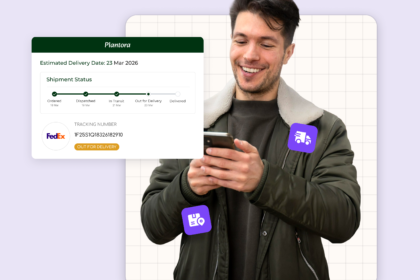
OneTrack’s Predictive Delivery Estimates solve this by displaying accurate, AI-calculated delivery dates directly on your product pages, cart, and checkout. Not ranges. Actual dates.
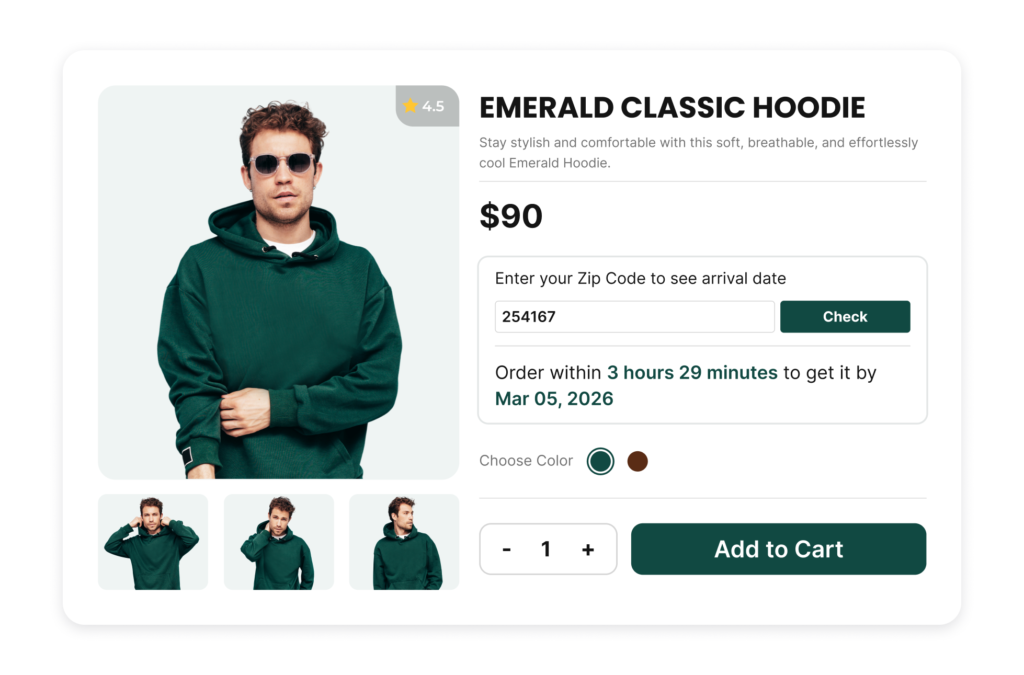
When a shopper sees “Arrives Thursday, March 12” instead of “ships in 3 to 5 days,” they have the information they need to commit. This matters even more for time-sensitive purchases like gifts, event outfits, or supplies for an upcoming project. A shopper buying a birthday gift needs to know it arrives before the birthday. If your store cannot tell them that, a competitor’s store will.
The impact on conversion is measurable. Stores displaying accurate delivery dates at checkout see meaningful reductions in cart abandonment because they are answering the question before the shopper has to ask it.
Create Urgency Without Discounting
Discounts are the most expensive way to create urgency. They train customers to wait, compress your margins, and attract buyers who will not come back at full price.
Order countdown timers work differently. When a shopper sees “Order within 3 hours 22 minutes to get it by Friday,” that is urgency rooted in logistics, not artificial pressure. It gives them a real reason to act now, tied directly to a delivery promise they already care about.
The psychological mechanics here are straightforward. Shoppers who were on the fence about timing now have a concrete decision point. Buy now and get it by Friday. Wait, and you might not. That framing converts hesitation into action without touching your pricing.
Pair a countdown timer with accurate delivery estimates and you have a checkout experience that answers two of the biggest shopper questions simultaneously: Will it arrive when I need it, and what happens if I wait?
Protect Every Order Automatically with Shipping Insurance
Lost and damaged packages are a reality of e-commerce. How your store handles them determines whether a customer comes back.
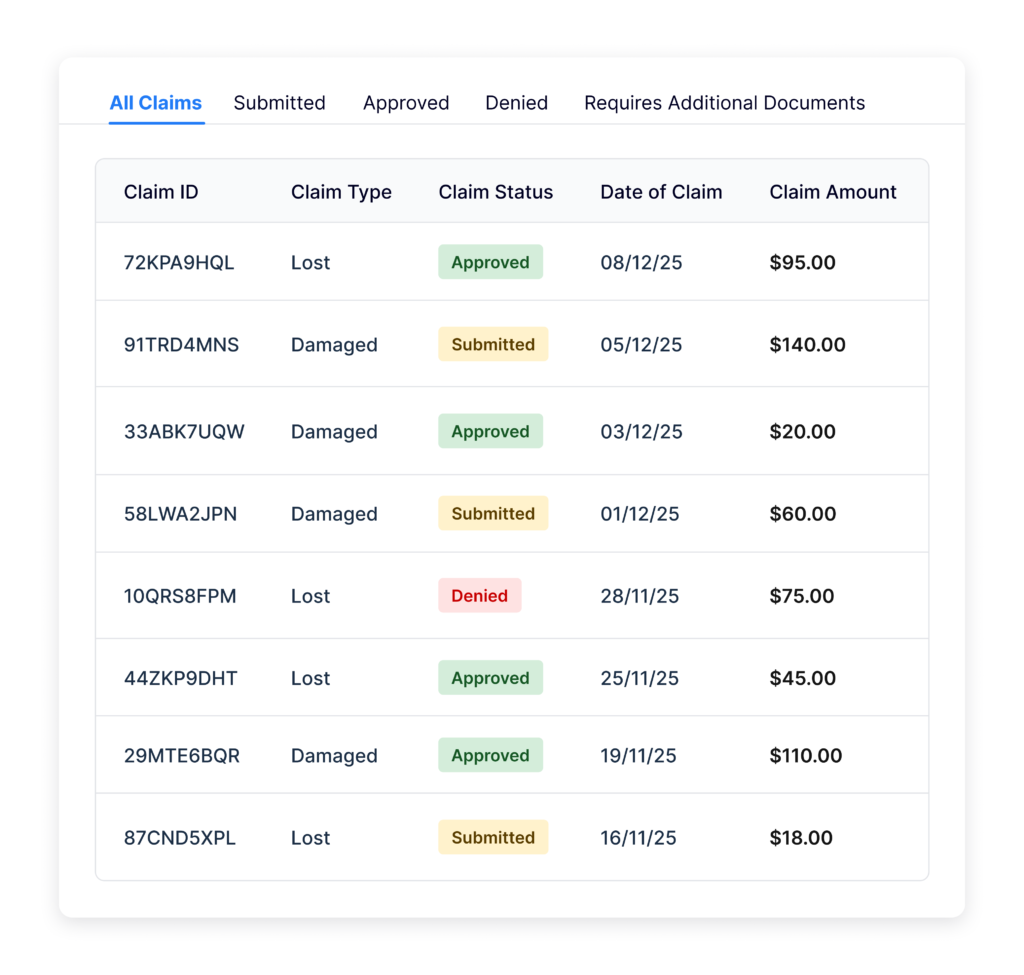
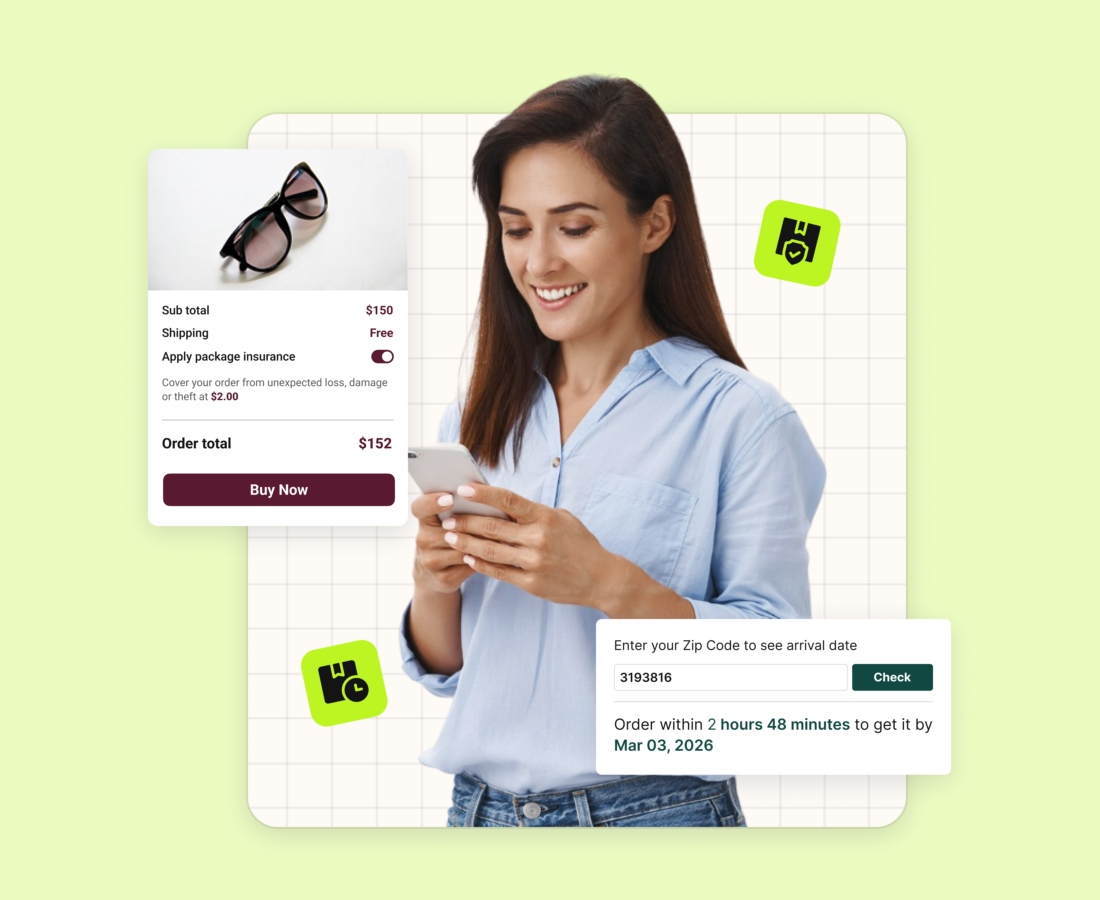
OneProtect’s Automated Shipping Insurance covers every order up to $2,000 against loss or damage without requiring any manual action from your team. Every shipment is protected from the moment it leaves your warehouse, and claims are handled without the back-and-forth that frustrates both customers and support staff.
For conversion, the benefit is indirect but significant. Stores that visibly protect orders attract higher-value purchases. When a shopper is deciding whether to buy a $300 item from your store versus a larger retailer, knowing that their order is protected if something goes wrong removes a real objection. You are not just selling the product. You are selling the confidence that comes with it.
Let Shoppers Add Their Own Protection at Checkout
Some shoppers want control. Shopper Opt-in Insurance gives it to them.
With a single click at checkout, shoppers can add order protection to their purchase before they complete it. For high-value items, this is a conversion lever you are currently not using. A shopper who was hesitating about a $250 order because of what happens if it gets lost now has a way to answer that concern themselves, on the spot, for a small fee.
This matters for a specific type of shopper: the one who is nearly sold but needs one more reason to trust the transaction. Opt-in protection gives them agency. That agency closes the sale.
Remove Purchase Anxiety with a Replacement Guarantee
First-time shoppers carry a specific kind of anxiety that returning customers do not. They have no history with your store. They do not know how you handle problems. That uncertainty is enough to push them toward a brand they already know, even if your product is better.
A Replacement Guarantee changes that calculus. When you explicitly promise to replace a lost or damaged package, you are making a public commitment that removes the biggest what-if from the shopper’s mind. They do not need to trust your claims about product quality. They just need to know that if the package never shows up or arrives broken, they are covered.
The guarantee works hardest at the top of the funnel where new visitors are deciding whether to take a chance on your store. It also compounds over time: customers who convert because of the guarantee and receive a smooth delivery become repeat buyers without the anxiety discount.
The Bottom Line
Conversion rate optimization is usually discussed in terms of page speed, button color, and checkout flow. Those things matter, but they are incremental. The bigger levers are the ones that address what shoppers are actually afraid of: not knowing when their order arrives, not knowing what happens if it does not, and not feeling any reason to buy today instead of tomorrow.
Predictive delivery dates, countdown timers, automated insurance, opt-in protection, and a replacement guarantee each tackle one of those fears directly. Together, they make your store the easier, safer, more confident choice.
Frequently Asked Questions
- How much do accurate delivery dates actually affect conversion rates?
Significantly. Shoppers who see a specific delivery date at checkout are more likely to complete a purchase than those who see vague shipping windows. The effect is strongest for time-sensitive purchases where the arrival date is part of the buying decision.
- Does an order countdown timer feel manipulative to shoppers?
Not when it is tied to a real logistics cutoff. A countdown that reflects an actual carrier pickup deadline is honest urgency. Shoppers respond well to it because it helps them make a decision they were already trying to make. It becomes manipulative only when the deadline is artificial or resets constantly.
- What does OneProtect cover and how does the claims process work?
OneProtect automatically covers every order up to $2,000 against loss or damage in transit. Claims are processed without the manual back-and-forth typical of traditional carrier claims, reducing resolution time for both your team and the customer.
- Is shopper opt-in insurance the same as automated coverage?
No. Automated shipping insurance covers all your outbound orders at the merchant level. Shopper opt-in insurance is a checkout feature that lets individual customers add protection to their own order for a small fee. They serve different purposes and can run simultaneously.
- Does a replacement guarantee increase the number of fraudulent claims?
The data does not support that concern for most e-commerce brands. The conversion and retention gains from offering a replacement guarantee outweigh the cost of occasional bad-faith claims. Most customers who invoke the guarantee do so legitimately, and handling those cases well turns a negative experience into a loyalty driver.
Monthly Newsletter
Get practical solutions and insights to tackle real-world post-purchase challenges directly in your inbox